 Skip to content


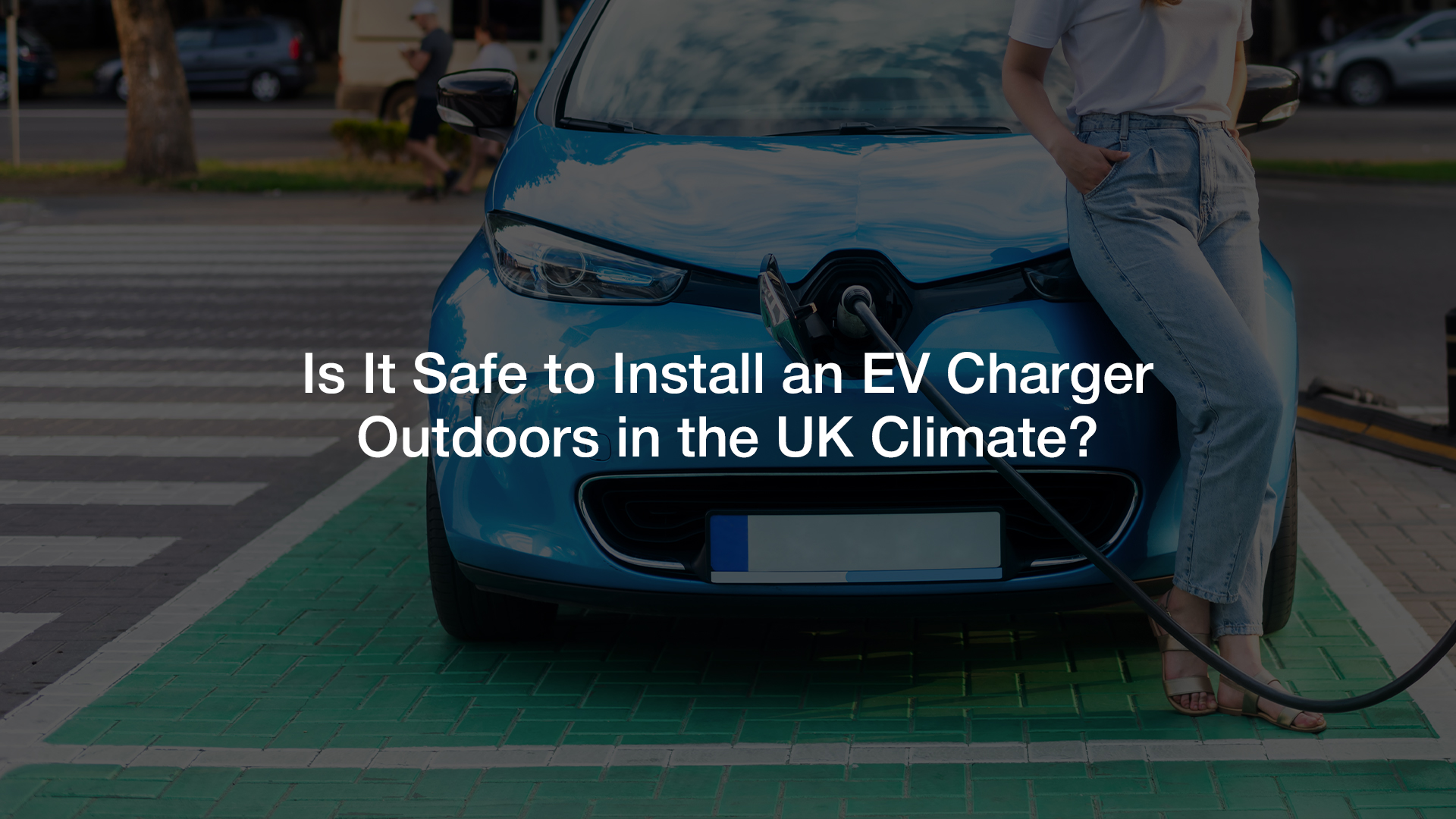
Installing an EV Charger outdoors is increasingly common in the UK, but many homeowners wonder: is it truly safe given our weather, wiring standards and the uncertainty around the long-term durability of electric vehicle chargers?
With over 73,000 public charging devices installed in the UK by early 2025 and rapid growth in home charger installations too, understanding outdoor safety has never been more important.
In this article, we’ll explore all the aspects of outdoor installation – from weather protection, certification, electrical safety, positioning, and long-term maintenance – so you can make an informed decision for your own home’s EV charging setup.
Choosing an Outdoor EV Charger: What Homeowners Must Consider

Before looking at specific factors, it’s important to understand what makes outdoor installation unique in the UK. Weather fluctuations, electrical regulations, and long-term durability requirements mean homeowners must look beyond basic features.
With that in mind, here are ten essential considerations to help you make a confident decision.
1) Understand How the UK Climate Affects Outdoor Charging
The UK climate can be punishing in subtle ways: frequent rain, high humidity, cold winters, occasional frost, and even wind-driven dust. An outdoor installation of a Certified EV Charger or Approved EV Charger must account for water ingress, corrosion, temperature fluctuations and outdoor electrical protection.
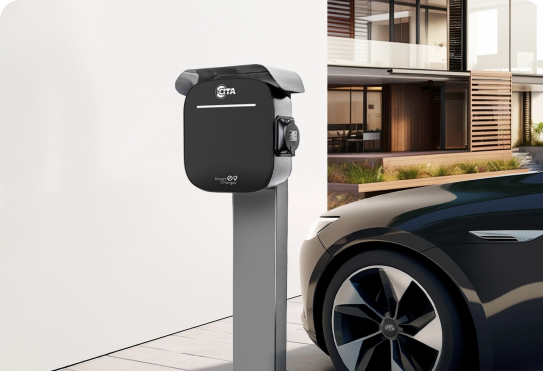
While many people assume indoor garage installation is safest, the reality is that outdoor chargers are designed for this environment – provided they meet the correct IP and IK ratings and are installed in compliance with UK wiring regulations and manufacturer guidance.
2) Weatherproofing: IP and IK Ratings Matter More Than You Think
One of the first checks when you look at a charger is its ingress-protection (IP) and impact-protection (IK) ratings. Outdoor-rated units must withstand rain, snow, dust and physical knocks. For instance, an IP65 rating indicates the unit is dust tight and protected against water jets, while an IK10 rating means it can withstand 20 joules of impact (e.g., a rock or ball hitting it).
When you select a reliable charger manufacturer or ask for a home EV charger for your driveway, ensure that the outdoor unit is rated accordingly. This means your charger is suited to British climate conditions – from sleet in December to summer thunderstorms.
3) Electrical Safety: Grounding, RCD Protection and Installation Standards
Outdoor installations carry additional demands when compared to indoor wiring. A charger mounted outside must be properly grounded, connected via a dedicated circuit breaker, and often behind a residual-current device (RCD) specific for EV charging. Using a smart charger with built-in protections adds further safety.
Additionally, Certification matters: choosing an Approved EV Charger ensures that the unit has been tested for fault currents, over-voltage, isolation failure and meets UK-specific electrical standards. Always use a qualified electrician registered under a competent person scheme to guarantee safety and warranty continuity.
4) Positioning and Exposure: Choosing the Right Spot Outside
Where you mount your outdoor charger can make a big difference. Try to choose a location that:
- Is within reach of your parking bay and avoids long trailing cables
- Has some overhead cover or wall protection – reducing direct exposure to rainfall or snow
- Is close to your house consumer unit (to minimise cable runs)
- Avoids being directly driven on by vehicles or exposed to heavy foot traffic
Even the best chargers will last longer if they’re placed thoughtfully. Faults often originate from environmental stress – so a little thought goes a long way.
5) Maintenance and Longevity: It’s Not a “Fit and Forget”
Installing a high-quality outdoor charger isn’t just about the day you plug it in – it’s about years of reliable performance. Weather cycles, UV exposure, temperature changes, and occasional knocks will test the build quality of the unit.
Regular maintenance includes cleaning the enclosure to remove debris or moss, checking the cable and connector for signs of wear, reviewing any firmware updates (for smart chargers), and ensuring the protective seals remain intact. Choosing a charger from a reputable ev charging hardware supplier helps ensure spare parts and support are available.
6) Compatibility: Does Outdoor Installation Affect Charger Type?
You’ll find many outdoor-rated models from top manufacturers, so outdoor installation doesn’t limit your choice of ac EV charger or smart features. For home use, outdoor units commonly come with 7 kW ratings and sometimes 22 kW if the supply allows.
Just make sure the model is listed as a Certified EV Charger for outdoor use under UK standards. The physical environment should match the product spec. If you move house or repurpose the charger, having a widely compatible outdoor model gives flexibility.
7) Smart Features and Connectivity: Don’t Sacrifice Because It’s Outside
Many homeowners assume that outdoor units mean fewer smart features, but that’s not necessary. Modern outdoor chargers can still function as smart chargers – with apps, scheduling, energy-monitoring, and remote diagnostics – even when installed outdoors.
If your outdoor charger can talk to your WiFi or mobile data and you can monitor usage through an app, you’ll gain better control of your home charging costs and patterns. Make sure the outdoor unit has sealed electronics and weather-proof connectivity.
8) Cost-Benefit: Outdoor Charger vs. Indoor Garage Option
Outdoor installation can sometimes save money compared to installing inside a garage, especially if your parking is drive-side and the garage is detached. Short cable runs, easier access and simpler mounting can mean lower installation costs.
On the other hand, if you face longer cable runs, require external consumer-unit changes, or need weatherproof mounts, costs may rise. Always compare quotes and ensure the proposed outdoor charger meets the same standard you’d expect indoors – for instance an Approved Charger with a full outdoor rating.
9) Value for Money: Quality Outdoor Equipment Pays Off
When buying an outdoor charger, going for a cheap generic unit may lead to problems. A well-specified outdoor unit might cost more upfront, but issues like water ingress, damaged enclosure, or lacking protections can cost more in the long run.
Aim for chargers from reputable charger manufacturer brands that publish outdoor-rating specs, support plans and warranty extensions. Having a charger that’s built for UK external installation means fewer repairs and longer service life – better value for your investment.
10) Future-proofing Your Home Charging Setup
Outdoor installation gives unique advantages for future flexibility. If you upgrade to a higher-capacity EV, add solar panels, or install a battery system, your outdoor charger should fit into the planned ecosystem. Choosing a model with smart connectivity, flexible mounting, and a robust outdoor design helps future-proof your setup.
UK home charging needs are evolving quickly, and selecting an outdoor-rated charger that can integrate with wider home energy systems positions you well for years of effective ev charging solutions.
Outdoor Installation Can Be Safe - With the Right Approach
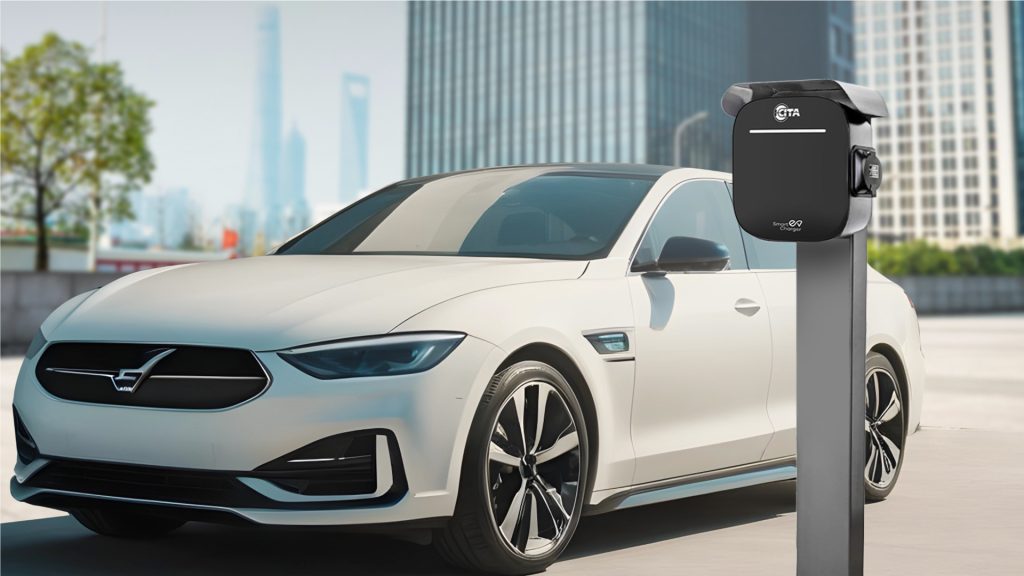
Installing an EV Charger outdoors in the UK can absolutely be safe – and in many cases ideal – as long as you treat it with the same rigour as any major electrical installation. By selecting a Certified EV Charger, ensuring correct outdoor ratings, professional installation, and thoughtful positioning, you can enjoy reliable, convenient home charging for years to come. Official data shows that over 90 % of EV drivers in the UK have off-street parking and therefore the ability to install a home charger; this trend underlines the importance of doing it right.
In your search for a dependable home charging solution, manufacturers such as CITA EV Charger offer outdoor-rated equipment with full certification, support and smart features designed for UK conditions. If you’re ready to explore your options, consult with a qualified installer and compare outdoor-rated models carefully.
Ready to take the next step?
For a free consultation on outdoor home charger installation, or to compare approved outdoor models built for UK use, get in touch with CITA EV Charger today.