 Skip to content


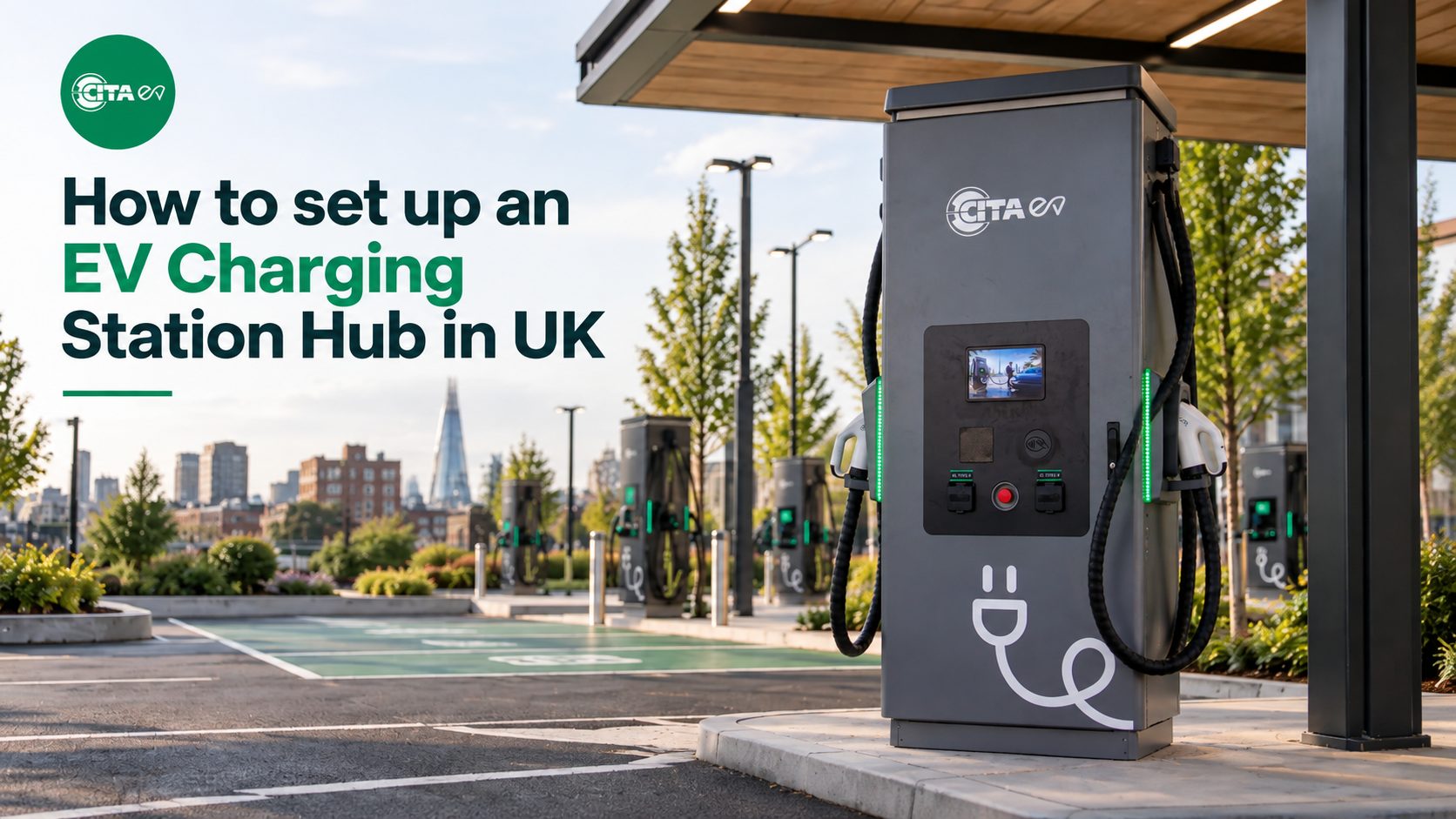
Setting up an EV charging station Hub in UK requires much more planning than installing a few individual chargers. A successful hub needs the right location, multiple charging bays, sufficient grid capacity, carefully selected DC chargers, convenient vehicle circulation and technology capable of managing several charging sessions simultaneously.
The need for high-capacity infrastructure is growing. According to Department for Transport statistics, the UK had 121,171 public EV chargers as of 1 July 2026, including 28,887 rapid or ultra-rapid chargers rated at 50 kW and above. Around 12% of public chargers were rapid and another 12% were ultra-rapid.
For charge point operators (CPOs), motorway service locations, fleets, landowners and commercial developers, understanding how a multi-charger hub works is therefore an important first step before committing land and investment.
What Is an EV Charging Station Hub?
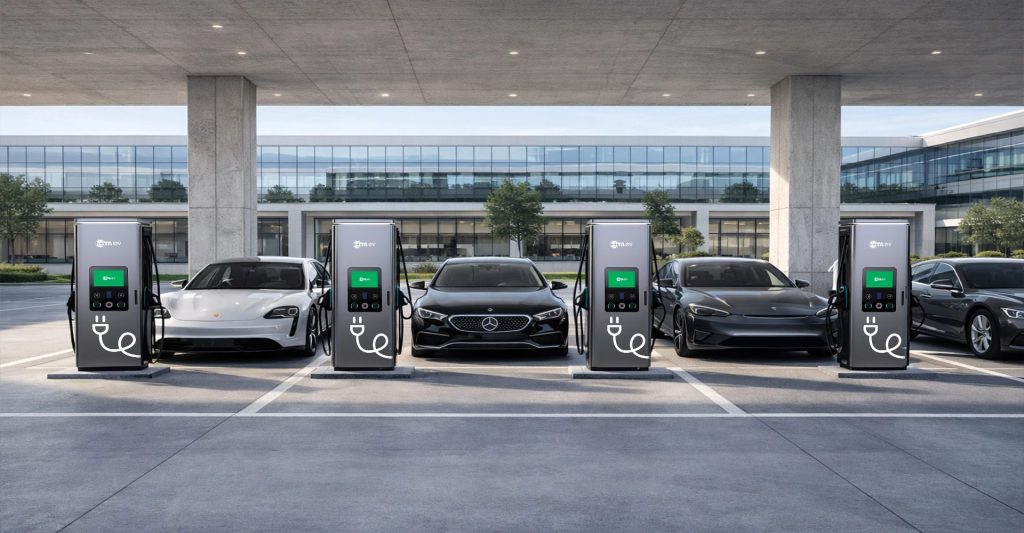
An EV charging station Hub is a dedicated charging location containing multiple charging points, allowing several electric vehicles to charge at the same time.
Unlike an individual charger installed in a car park, a hub is planned specifically for higher vehicle volumes. It will commonly include several DC fast or ultra-fast charging bays, electrical distribution infrastructure, payment facilities, smart load management and a Charge Point Management System (CPMS).
Some larger hubs may also incorporate amenities such as toilets, cafés, seating or retail facilities, particularly where drivers are expected to remain on site while charging.
The concept is similar to a modern refuelling forecourt, but the energy and operational requirements are very different.
How Does a Multi-Charger EV Hub Work?
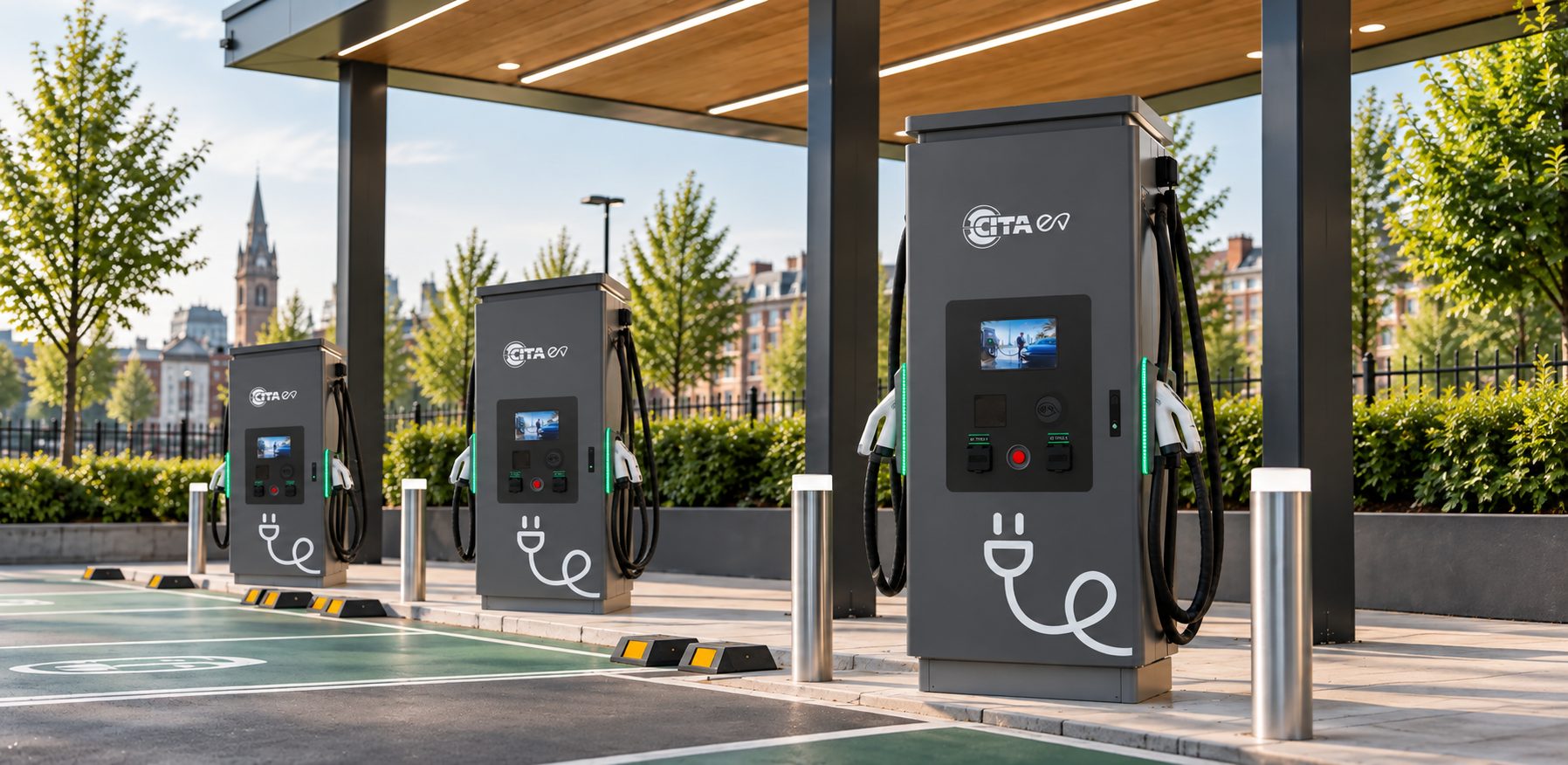
Electricity enters the site through its grid connection and is distributed to individual chargers through the hub’s electrical infrastructure.
When multiple DC fast chargers UK operate simultaneously, total power demand can become substantial. Smart load management can dynamically distribute available power according to the number of connected vehicles and their charging requirements.
A CPMS adds another management layer. Operators can use connected systems to monitor charger status, charging sessions, electricity usage and faults across the facility.
This is particularly important at larger hubs because operators are managing an interconnected charging network rather than isolated equipment.
What Types of EV Charging Hubs Work in the UK?
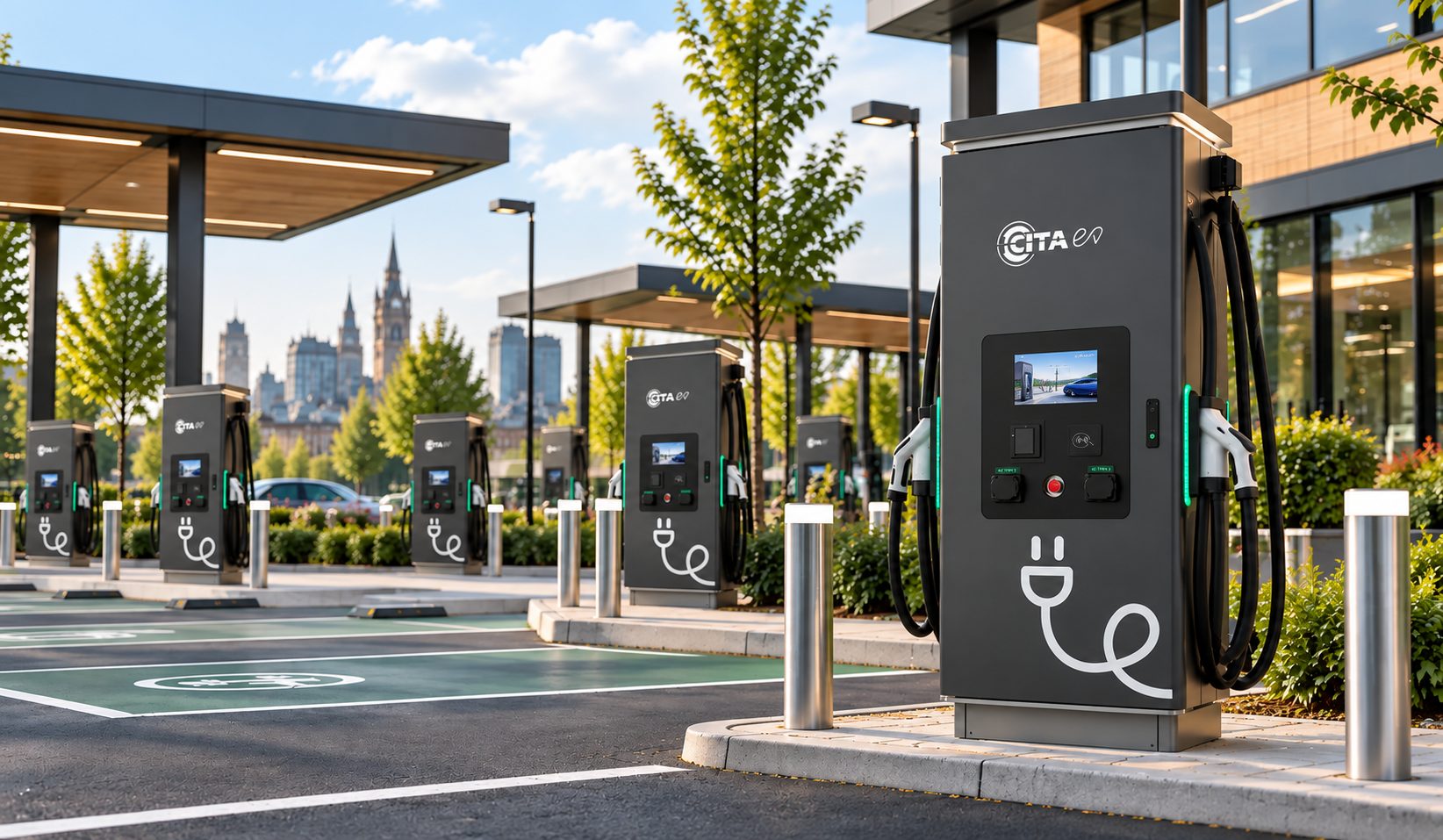
The design of an EV charging station Hub in UK should reflect who will use it and why they are stopping.
Motorway and Strategic Road Hubs
These are designed around drivers completing longer journeys. Locations near motorways and major A-roads generally need high-power DC charging and straightforward access because drivers prioritise shorter stops and quick turnaround.
Urban Charging Hubs
Urban hubs can provide an alternative for EV drivers without access to off-street home charging. Suitable locations may include existing car parks, retail areas, transport interchanges and other accessible urban sites.
Fleet and Commercial Hubs
Delivery fleets, taxis, private-hire operators, logistics businesses and company vehicles can use dedicated hubs built around predictable vehicle schedules. Charger quantity and power should be matched with fleet size and operational downtime.
Destination Charging Hubs
Retail parks, hotels, leisure destinations and commercial developments may also accommodate multiple chargers. Depending on typical dwell time, these locations can combine AC charging with DC fast charging rather than relying exclusively on ultra-rapid units.
Where Should an EV Charging Hub Be Located in the UK?
Finding land with high traffic is only the beginning. A strong EV charging hub location needs charging demand, electrical capacity and convenient access to work together.
Potential locations include:
- Motorway and major A-road corridors
- Service areas and fuel forecourts
- Retail parks and supermarkets
- Urban public car parks
- Airports and transport interchanges
- Hotels and leisure destinations
- Fleet and logistics depots
- Business and commercial parks
Traffic patterns should be analysed alongside local EV ownership, nearby charging competition and expected dwell time.
Regional charging availability also matters. DfT data shows substantial differences across the UK. As of July 2026, Scotland had 59.1 rapid-or-above public chargers per 100,000 people, compared with 27.9 in London and 19.3 in Northern Ireland.
However, an underserved region does not automatically make every site commercially suitable. Grid capacity, traffic flow, land cost and local demand still need individual assessment.
Why Are EV Charging Hubs Becoming Important in the UK?
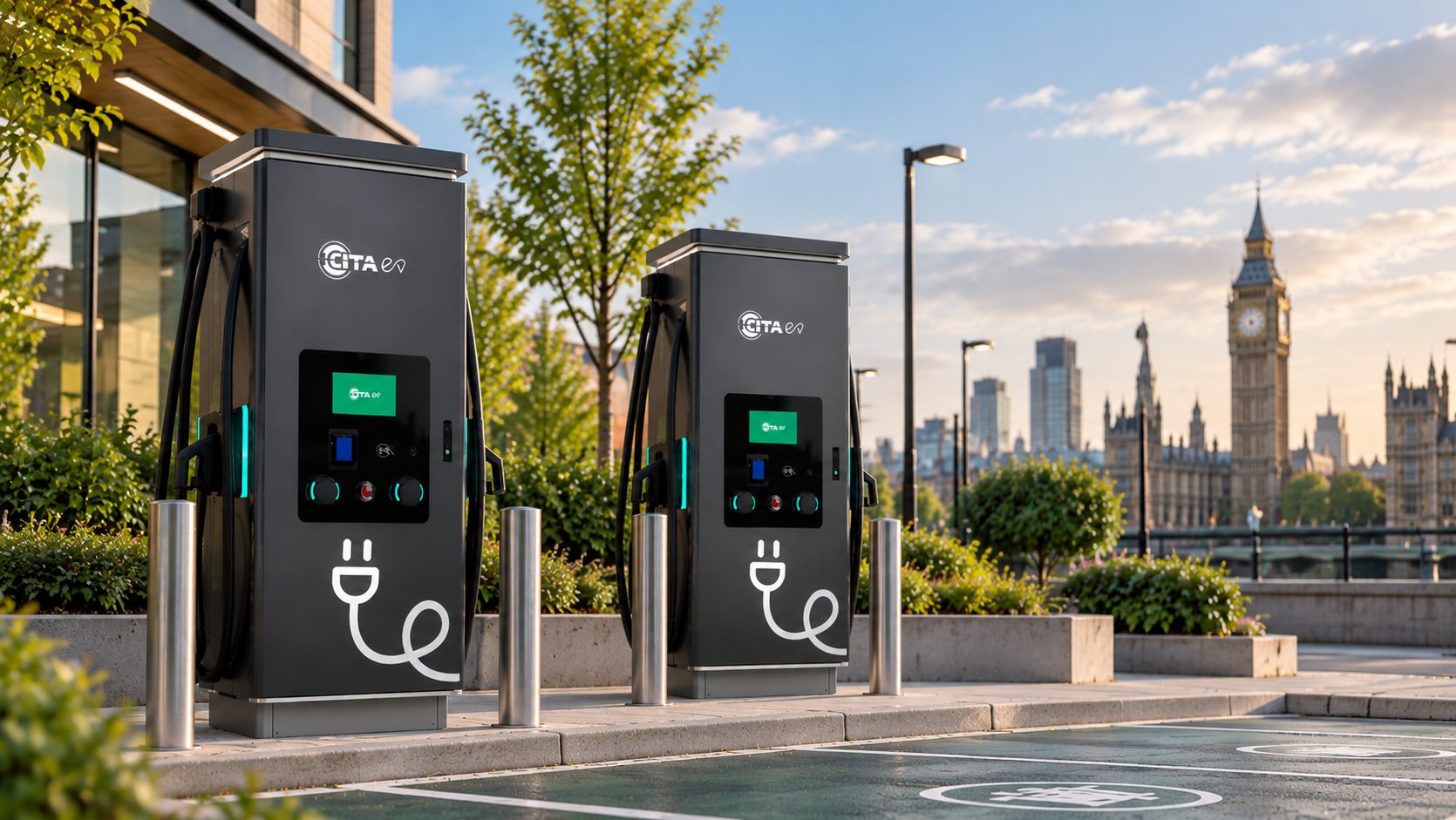
The UK already has an extensive public charging network, but charger type and location vary considerably.
Charging hubs can complement distributed public infrastructure by concentrating multiple high-power chargers in locations where significant numbers of EV drivers need them.
This provides several advantages. EV Drivers have alternative bays if one charger is occupied, fleets can charge multiple vehicles simultaneously, and operators can manage several chargers through shared electrical and digital infrastructure.
A well-planned EV charging station Hub in UK can also expand progressively as demand grows instead of requiring its full future capacity from the first day.
EV Charging Hub vs Home Charging
Both are essential to the UK’s charging ecosystem, but they solve different problems.
An EV charging station Hub therefore does not replace home charging. Instead, it fills the gap for long journeys, high-mileage vehicles, fleets and motorists who cannot conveniently charge where they live.
How to Set Up an EV Charging Station Hub in UK
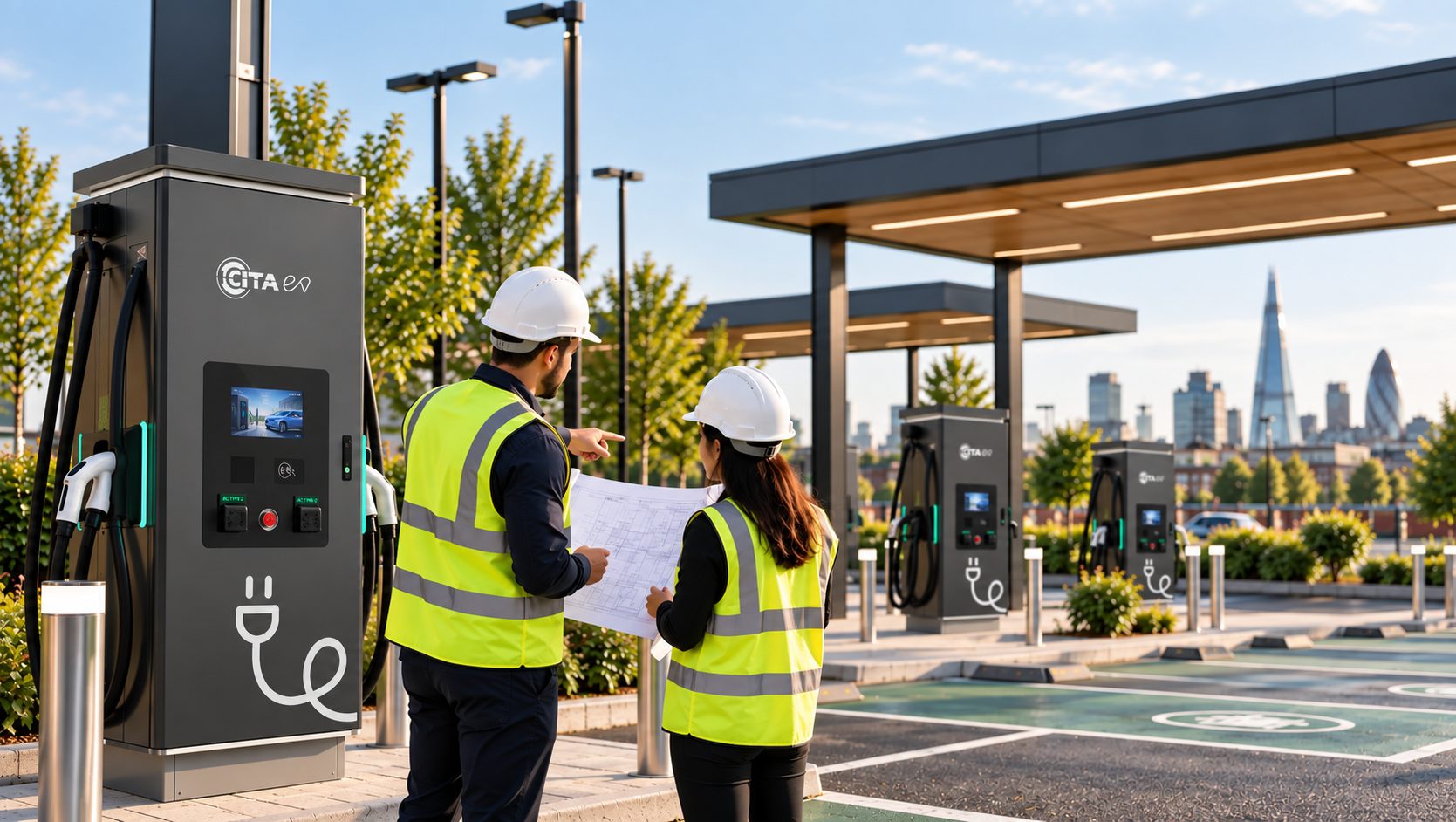
Before ordering chargers or beginning construction, developers should answer four fundamental questions: Who will use the hub? How many charging bays are required? How much space is available? And can the local electricity network support the proposed capacity?
These decisions should be evaluated together because changing one can significantly affect the others.
1) Choose the Right Location and Study Charging Demand
Begin with a detailed demand assessment.
Study traffic volumes, nearby EV ownership, existing public chargers, surrounding businesses, average dwell time and the type of journeys drivers make through the area.
For motorway or A-road locations, visibility and easy entry and exit are particularly important. Urban hubs may depend more heavily on nearby residents without private parking, commuters, taxis and local commercial activity.
Grid availability should be investigated before purchasing or leasing a site. A high-traffic location may become considerably more expensive if extensive reinforcement is required to support multiple high-power chargers.
2) Decide How Many DC Chargers the Hub Needs
There is no universal minimum number of chargers that automatically defines a charging hub.
A smaller site could begin with four to six charging positions, while a strategic motorway, fleet or high-demand facility may need significantly more.
Estimate peak-hour arrivals, average charging-session length, expected utilisation and acceptable queuing time.
Remember that the number of physical chargers and the number of vehicles that can charge simultaneously are not always identical. Some charging equipment can serve multiple charging positions.
It is usually better to size an EV charging station Hub in UK using expected demand and a phased expansion plan rather than installing the maximum possible number immediately.
3) Calculate How Much Land and Space You Need
There is also no single square-foot figure suitable for every UK charging hub.
As an early feasibility estimate, a four-to-six-bay DC facility might require roughly 3,000–5,000 sq. ft., but this should not be treated as a planning standard.
The final footprint depends on bay dimensions, accessibility, charger positioning, substations, electrical cabinets, vehicle circulation, queuing space, landscaping and any customer amenities.
Larger EVs and vans may also require additional manoeuvring space.
For UK projects, accessibility should be incorporated from the design stage rather than added afterwards. Designers should consider inclusive bay layouts, charger positioning, cable handling, kerbs, bollards and unobstructed access for different users.
4) Assess Grid Capacity Before Selecting Charger Power
This can determine whether the entire project is technically and financially viable.
Consider a hub containing six 180kW chargers. If every charger theoretically operated at maximum output simultaneously, connected charging demand alone could reach 1.08MW.
The site’s Distribution Network Operator (DNO) therefore needs to be engaged early to understand connection capacity, reinforcement requirements, lead times and costs.
Operators should assess transformers, switchgear, distribution infrastructure and maximum demand before finalising charger quantities.
Smart EV charging load management can then help distribute available power between active sessions instead of allowing every charger to continuously request maximum output.
Battery energy storage may also be evaluated where it makes technical and commercial sense.
5) Select the Right DC Charger Configuration
Charger selection should follow the operational model.
A motorway hub designed for short stops may benefit from higher-power DC chargers, while an urban or destination hub could use a combination of power levels.
CITA EV Charger offers DC fast charging from 40kW up to 480kW, allowing charging capacity to be matched with expected vehicles, dwell time and site power.
The UK’s DfT currently classifies public chargers from 50kW to under 150kW as rapid, while chargers rated 150kW and above are classified as ultra-rapid.
Do not select chargers purely because a higher kW figure looks more attractive. Vehicle charging capabilities and real utilisation should determine the configuration.
6) Design Traffic Flow and the Driver Experience
Drivers should be able to enter the site, identify an available bay, manoeuvre safely, connect and leave without crossing unnecessary traffic.
An EV charging station Hub should therefore account for turning radii, one-way circulation where appropriate, queuing areas, cable reach, signage and charger-port positions on different EVs.
Customer experience matters too.
For publicly accessible UK charging hubs, the Public Charge Point Regulations 2023 introduce specific consumer requirements. Depending on charger type and deployment date, these include contactless payment, transparent pence-per-kWh pricing, payment roaming, open data and a free 24/7 staffed helpline.
Rapid public charging networks rated 50 kW and above are also subject to an average 99% annual reliability requirement across the operator’s rapid network.
These obligations should influence hardware, payment and software decisions from the planning stage.
7) Build Smart Management into the Hub
Multiple chargers need coordinated management.
A Charge Point Management System can give operators visibility across the hub, including charger status, sessions, energy consumption and faults.
CITA’s CPMS and connected charging technology can support centralised management across multiple charging points.
For UK public infrastructure, operators should also consider regulatory data requirements. Current regulations require charge point operators to make specified reference and availability data openly available using the Open Charge Point Interface (OCPI).
Digital infrastructure should therefore be treated as a fundamental part of hub design rather than software added after installation.
8) Design the Site for Expansion
An EV charging station Hub in UK should ideally be capable of growing without rebuilding its core infrastructure.
A project might initially operate four or six chargers while preparing additional bays, cable ducts, electrical distribution capacity and foundations for later phases.
This can reduce the disruption and cost involved when utilisation rises.
Operators can also assess solar canopies and battery energy storage where appropriate. These technologies should be evaluated according to the site’s electricity profile and commercial case rather than assumed to be necessary for every hub.
Future-proofing is ultimately about creating options: enough land, electrical planning and digital capability to respond when charging demand changes.
Key Challenges to Consider Before Building a UK Charging Hub
Even a strong location can face practical constraints. Common challenges include:
- Grid connection capacity: Multi-charger DC hubs can require substantial electrical connections and reinforcement.
- Connection lead times: Major grid work can influence the overall project schedule.
- Land and construction costs: High-traffic locations may carry significant acquisition, lease and civil-work costs.
- Early utilisation: Revenue may take time to build while local EV demand develops.
- Queuing: Too few charging positions can create congestion during busy periods.
- Reliability: Public rapid charging networks must meet demanding operational expectations and UK regulatory requirements.
- Accessibility: Layout and equipment selection should accommodate a broad range of users.
- Expansion: Poor initial electrical or civil planning can make additional chargers expensive to install later.
A feasibility study should therefore happen before committing to land, charger quantities or final equipment specifications.
Build a Future-Ready EV Charging Station Hub in UK with CITA EV Charger
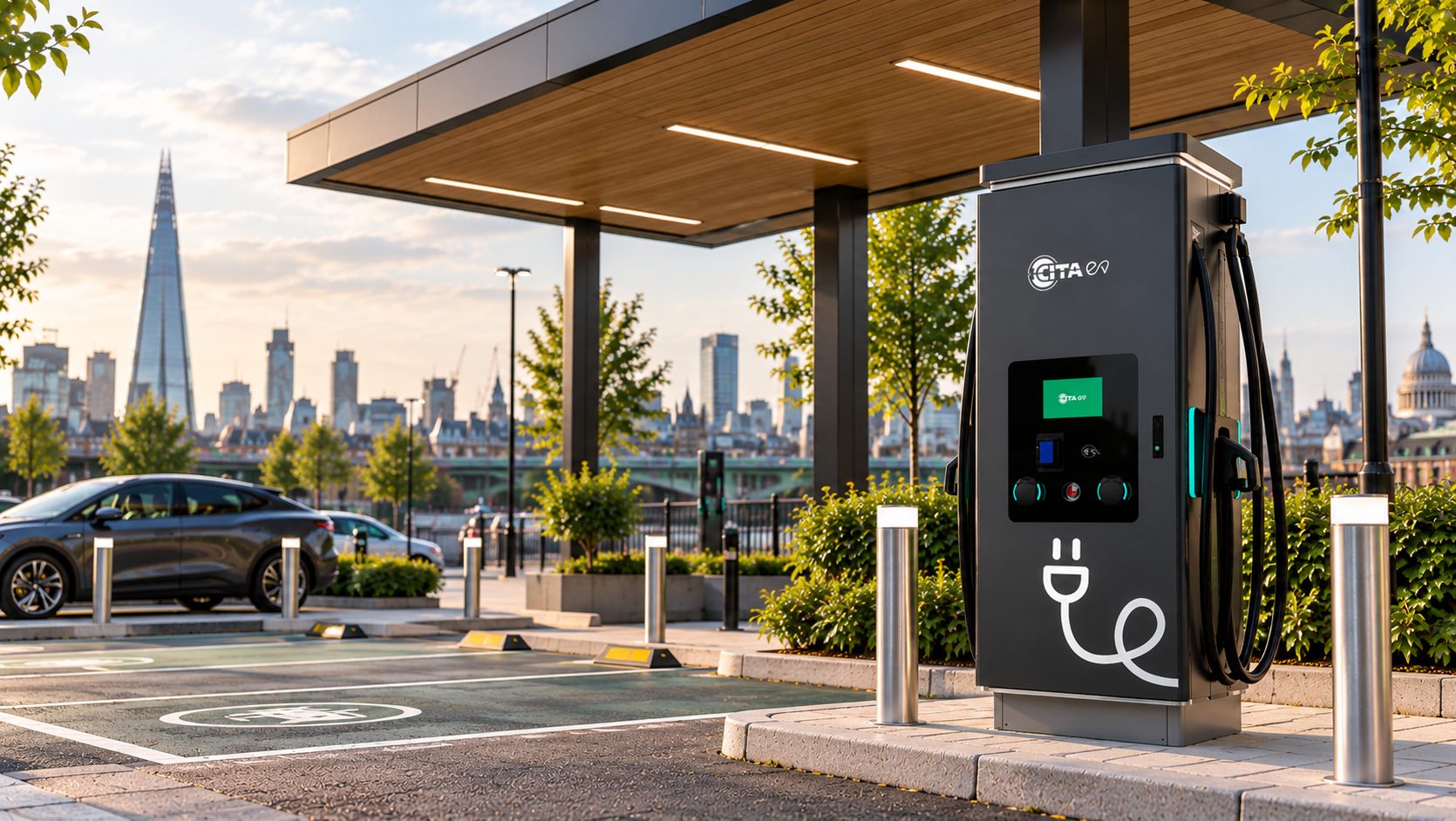
Developing an EV charging station Hub in UK is ultimately a balance between location, land, electrical capacity, charger power, driver demand, accessibility, regulatory compliance and long-term scalability.
CITA EV Charger provides a broad portfolio for UK charging projects, including DC fast and ultra-fast chargers from 40kW to 480kW, alongside high-capacity split DC charging systems for larger multi-vehicle applications. CITA’s CPMS and smart charging capabilities can also support connected management across multiple charging points.
Whether you are considering a smaller four-to-six-bay facility or planning a larger public, motorway or fleet charging hub, the strongest projects begin with infrastructure designed around actual site requirements rather than charger numbers alone.
Planning an EV charging station Hub in the UK?
Contact CITA EV Charger for a free consultation and discuss the right charger capacity, configuration and smart management solution for your project.