 Skip to content


UK Charge Point Operators are managing increasingly complex networks as Britain’s public EV charging infrastructure continues to expand. By the end of July 2026, the UK had 122,724 public EV chargers across 47,441 charging locations, representing 9.5% year-on-year growth. Rapid and ultra-rapid infrastructure alone reached 29,246 chargers. As networks become larger and more heavily used, however, successful operation depends on far more than installing additional hardware.
Charger availability, maintenance, payment reliability, energy management, regulatory compliance and customer experience all influence whether a charging network can perform consistently and remain commercially sustainable.
What Makes Operating an EV Charging Network Challenging?
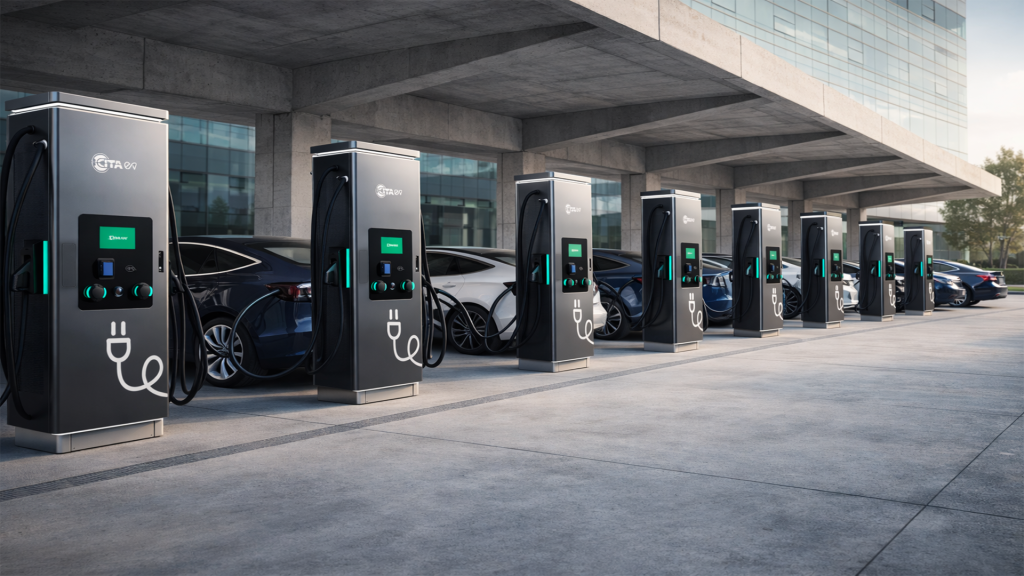
Running a public charging network requires several systems to work together continuously. Hardware must remain operational, software must communicate correctly, payments need to process without friction, energy must be available when required, and drivers expect a straightforward charging experience.
For UK Charge Point Operators, these responsibilities become more demanding as networks expand across different sites and charger types. Understanding the most common operational challenges is therefore essential for building charging infrastructure that can scale efficiently.
1) Maintaining High Charger Uptime
Availability is one of the most important measures of a successful EV charging network. A charger may be installed and visible on a network map, but if drivers regularly encounter faults, communication failures or unavailable connectors, its practical value quickly falls.
This is particularly important for rapid charging. Under the UK Public Charge Point Regulations 2023, CPOs must ensure that their network of public rapid charge points of 50kW and above achieves an average reliability of 99% over each calendar year. Operators must also publish reliability information and report it to the relevant authorities.
Maintaining this level of charger uptime requires continuous monitoring, remote diagnostics, preventive maintenance and clearly defined processes for resolving faults. Selecting charging hardware designed for sustained commercial operation can also reduce unnecessary service interventions.
2) Managing Maintenance Across a Growing Network
Operating ten chargers is very different from operating hundreds or thousands across multiple locations. As networks expand, maintenance becomes a logistical challenge involving hardware inspections, replacement components, field engineers, firmware updates and fault resolution.
A reactive maintenance model can become costly at scale. If technicians are dispatched only after a charger fails, operators may face longer periods of downtime and higher service costs.
A more effective approach combines remote charger monitoring with preventive maintenance. Charge Point Management Systems can help identify abnormal behaviour and operational issues before they develop into more serious failures.
Standardising equipment across sites can also simplify spare-parts management, technician training and maintenance procedures. For CPOs planning significant network expansion, serviceability should therefore be considered during charger procurement rather than after deployment.
3) Balancing Grid Capacity and Growing Power Demand
As charging speeds increase, the electrical requirements of charging sites become more demanding. A site containing multiple high-power DC chargers can require substantial grid capacity, particularly when several vehicles charge simultaneously.
For UK Charge Point Operators, simply increasing charger power does not always guarantee better site performance. Available grid connection capacity, maximum site demand and charging behaviour all need to be considered.
This makes load management increasingly valuable. Smart charging systems can dynamically distribute available power between chargers according to vehicle demand, site limits and operating priorities.
Operators planning larger charging hubs may also need to consider scalable electrical infrastructure, energy storage or phased expansion. Designing around both present utilisation and future demand can reduce the risk of expensive infrastructure redesign later.
4) Delivering Reliable and Simple Payment Experiences
Drivers increasingly expect EV charging to work much like other everyday transactions: arrive, connect, pay and charge.
Payment failures, unclear pricing or unnecessary registration steps can create frustration even when the charging hardware itself is functioning correctly.
UK regulations have strengthened requirements in this area. Depending on the type of public charge point, operators must support requirements including contactless payment, transparent pricing and payment roaming. CPOs must enable consumers to pay through at least one third-party roaming provider at their charge points.
This means payment infrastructure needs to integrate reliably with charger hardware, backend platforms and external payment or roaming services. Regular testing of the complete transaction process should therefore form part of network operations.
5) Managing Software, Connectivity and Interoperability
Modern EV chargers are connected devices. They communicate with backend platforms to authorise users, initiate sessions, transmit status information, calculate energy consumption and support remote management.
That connectivity introduces another operational layer.
Weak mobile coverage, backend communication failures or integration problems can interrupt charging even when the charger itself has no physical fault. Operators working with multiple charger manufacturers may face additional complexity if equipment behaves differently within the same management platform.
Support for established protocols such as OCPP (Open Charge Point Protocol) can improve interoperability between chargers and charge point management platforms.
UK CPOs also need to consider regulatory data requirements. Public Charge Point Regulations require operators to use the Open Charge Point Interface (OCPI) for specified open-data requirements, including accurate reference and availability information.
A scalable network therefore requires both reliable hardware and a well-integrated software ecosystem.
6) Maintaining a Consistent Driver Experience
Drivers generally judge a charging network by whether it works when they need it.
That experience extends beyond charging speed. Clear instructions, accurate charger status, accessible payment options, responsive screens, cable usability and support when something goes wrong all influence customer confidence.
The UK regulations also require a free-to-use, staffed 24/7 telephone helpline to provide real-time assistance at public charge points.
For UK Charge Point Operators, customer support should therefore be treated as part of network operations rather than a separate service function.
Analysing recurring support requests can also reveal operational weaknesses. If drivers repeatedly report payment problems, connector difficulties or unclear instructions at particular sites, those patterns can help CPOs prioritise improvements.
7) Scaling the Network Without Increasing Operational Complexity
The UK’s EV charging network continues to expand, with more rapid and ultra-rapid charging hubs being developed to support growing demand.
Expansion, however, can magnify existing operational inefficiencies.
Every additional location introduces more hardware to monitor, transactions to manage, maintenance requirements and data to process. Without a scalable operating model, management costs can rise alongside network size.
Successful expansion therefore depends on standardisation. CPOs can benefit from consistent charger architecture, centralised monitoring, remote management capabilities and equipment that can accommodate different site requirements without creating unnecessary complexity.
For UK Charge Point Operators, scalability should ultimately mean increasing charging capacity without proportionally increasing operational burden.
Building More Reliable and Scalable Charging Networks
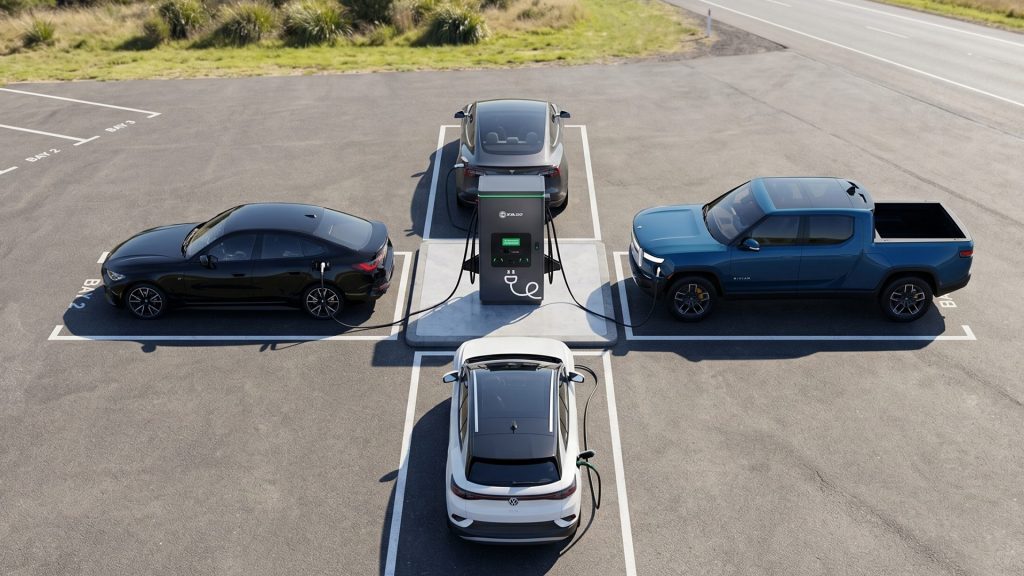
The next stage of UK EV charging infrastructure will be shaped not only by how many chargers are installed but also by how reliably and efficiently those chargers operate.
Uptime, preventive maintenance, grid capacity, payment integration, interoperability, customer experience and scalable network management are becoming fundamental considerations for UK Charge Point Operators. Addressing these areas early can help reduce downtime, control operating costs and create a more dependable charging experience as utilisation increases.
CITA EV Charger works with CPOs, charging-network developers, fleet operators and infrastructure partners to support scalable EV charging deployments with AC, DC fast and high-power charging solutions, alongside smart charging and network-management capabilities.
Planning to expand your charging network or explore a long-term CPO partnership?
Connect with CITA EV to discuss your infrastructure requirements and partnership opportunities.