 Skip to content


EV Charging Power Levels determine how quickly an electric vehicle can recharge its battery and get back on the road. As EV charging in UK continues to expand with thousands of new charging points being installed every year, understanding these power levels has become essential for EV owners, businesses, and fleet operators.
In fact, the UK now has over 50,000 public EV charging points across more than 30,000 locations, reflecting the rapid growth of electric mobility and the country’s push toward cleaner transportation.
Whether you’re installing an electric car charger at home or exploring large-scale EV charging solutions for commercial use, knowing how EV Charging Power Levels work helps you choose the right infrastructure. From 7kW AC chargers used in homes to 480kW ultra-fast DC chargers used on highways, each power level serves a different purpose within the EV ecosystem.
The Rapid Growth of EV Charging in the UK

The UK is rapidly expanding its EV charging network as part of its push toward cleaner transportation. According to the UK Department for Transport, the country now has tens of thousands of public charging points installed across cities, highways, and residential areas.
Major urban centers such as London, Manchester, and Birmingham are leading the expansion of EV charging solutions, installing thousands of Approved EV Charger stations for public and private use.
With electric vehicles becoming more common, understanding EV Charging Power Levels is becoming just as important as understanding fuel efficiency once was for petrol vehicles.
What Are EV Charging Power Levels?

Simply put, Charging Power Levels refer to the amount of electrical power delivered from a charger to an electric vehicle’s battery. Power is measured in kilowatts (kW), and the higher the kW rating, the faster the vehicle can charge.
The charging speed depends on three key factors:
- The power output of the charger
- The battery capacity of the vehicle
- The maximum charging capability of the vehicle
For example, if a vehicle can accept only 11 kW of AC charging, connecting it to a 22kW charger will not double the charging speed.
This is why understanding Electric Vehicle Charging Power Levels is essential when selecting an electric car charger or planning EV charging solutions for homes, workplaces, or public infrastructure.
AC vs DC Charging: The Foundation of EV Charging

Before diving deeper into individual power levels, it’s important to understand the difference between AC EV charger and DC EV charger technology.
AC Charging
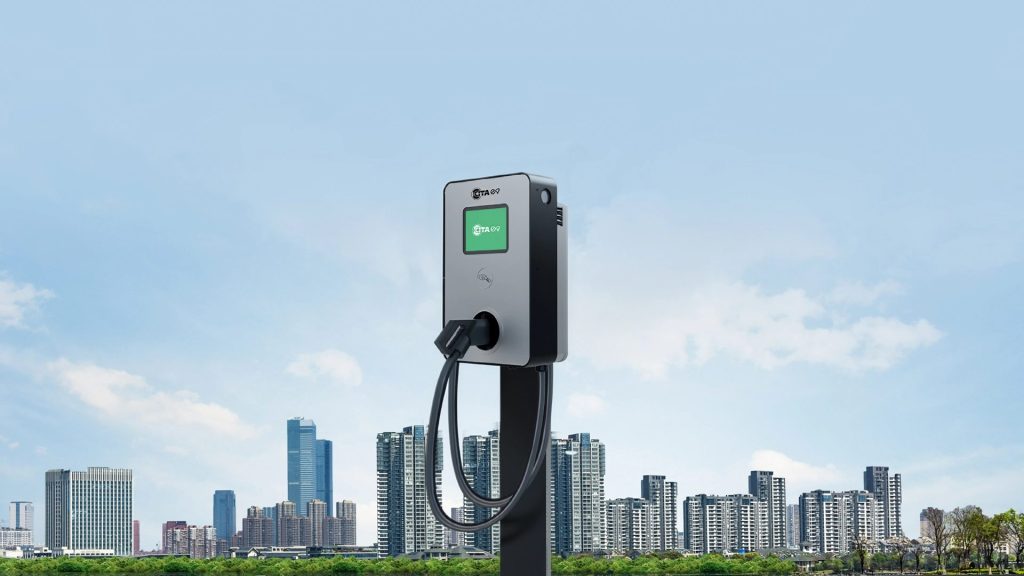
AC (Alternating Current) charging is the most common type of EV charging in UK, especially for homes and workplaces.
In AC charging:
- Electricity is supplied as alternating current.
- The vehicle’s onboard charger converts AC into DC before storing it in the battery.
Because of this extra conversion step, AC charging is generally slower but more affordable and easier to install.
Typical AC EV charger power levels include:
These chargers are widely used as Approved EV Charger installations in residential buildings and offices.
DC Charging
A DC EV charger works differently. Instead of sending AC electricity to the car, it converts the power to DC within the charging station itself.
This allows electricity to flow directly into the battery, bypassing the onboard charger.
Because of this direct delivery, DC chargers can achieve much higher EV Charge Power Levels and charge vehicles significantly faster.
DC chargers typically range from:
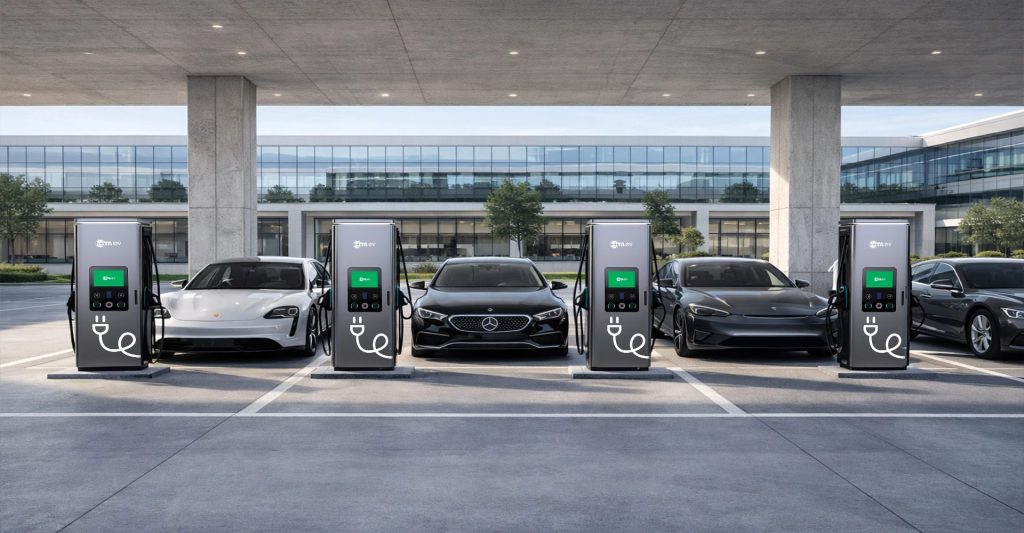
These powerful electric vehicle chargers are commonly found on highways, public charging hubs, and commercial fleet depots.
Understanding Different EV Charging Power Levels
To better understand how Charging Power Levels differ, the table below compares the most common charger types used for EV charging in the UK.
| Charger Type | Power Output | Charging Type | Typical Charging Time | Common Installation Location |
|---|---|---|---|---|
| Home EV Charger | 7 kW | AC EV Charger | 6–8 hours (full charge) | Residential homes |
| Fast Residential / Small Commercial | 11 kW | AC EV Charger | 4–6 hours | Apartments; small offices |
| Workplace Charger | 22 kW | AC EV Charger | 2–4 hours | Offices; hotels; public parking |
| Dual Charger | 44 kW (Dual AC) | AC EV Charger | 2–3 hours (per vehicle depending on split) | Commercial parking; malls |
| Fast Public Charger | 30 kW | DC EV Charger | 30–45 minutes | Urban public charging stations |
| Rapid Charger | 80–160 kW | DC EV Charger | 20–30 minutes (to 80%) | Highway charging hubs |
| Ultra-Fast Charger | Up to 480 kW | DC EV Charger | 15–20 minutes (to 80%) | High-traffic highways; fleet depots |
7kW Chargers – The Standard Home Charger
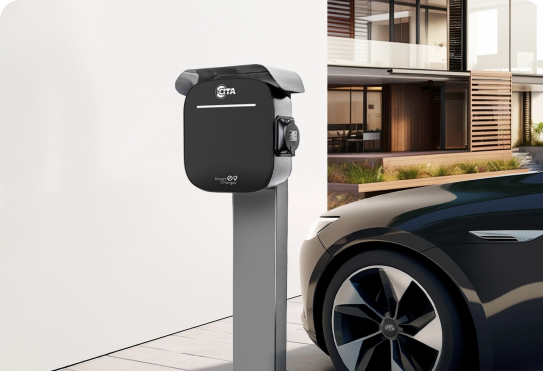
A 7kW smart EV charger is the most common home charging solution in the UK.
These chargers offer:
- Reliable overnight charging
- Compatibility with most EV models
- Affordable installation costs
With a 7kW electric car charger, most electric vehicles can fully recharge in 6 to 8 hours, making it ideal for daily commuters.
For homeowners adopting EV charging in UK, this power level offers the perfect balance between convenience and cost.
11kW Chargers – Faster Residential Charging
An 11kW AC EV charger provides faster charging than a 7 kW system and is often used in homes with three-phase power supplies.
Advantages include:
- Faster charging times
- Support for larger EV batteries
- Suitable for multi-EV households
Many modern apartment buildings and residential complexes install these electric vehicle chargers to support multiple EV owners.
22kW Chargers – Workplace and Public Charging
A 22kW EV charger is commonly used in commercial environments.
Typical locations include:
- Office buildings
- Shopping centers
- Hotels
- Public parking facilities
These chargers provide a significant boost in charging speed while still operating as AC EV charger systems.
Businesses offering EV charging solutions often choose this power level to serve employees and visitors efficiently.
44kW Dual AC Chargers – Charging Two Vehicles Simultaneously
A 44 kW dual AC charger is essentially two 22kW chargers combined into one system.
This setup allows two vehicles to charge at the same time.
These chargers are ideal for:
- Commercial parking areas
- Retail locations
- Fleet depots
- High-traffic public areas
By allowing simultaneous charging, these electric vehicle chargers improve charging availability without requiring additional infrastructure.
30kW DC Chargers – Entry-Level Fast Charging
The next step in EV Charging Power Levels is DC charging.
A 30kW DC EV charger offers significantly faster charging than AC systems.
These chargers are commonly used in:
- Small public charging stations
- Urban charging hubs
- Fleet depots
A 30 kW charger can recharge many EV batteries in approximately 30 to 45 minutes, making it ideal for short stops.
80kW to 160kW DC Chargers – Rapid Charging
Rapid DC EV charger systems deliver even faster charging speeds.
These chargers are commonly installed along highways and major transport routes.
Benefits include:
- Charging up to 80% in around 20–30 minutes
- Supporting long-distance EV travel
- Reducing wait times at charging stations
Rapid charging infrastructure plays a major role in expanding EV charging in UK.
480kW Ultra-Fast Chargers – The Future of EV Charging
At the highest end of Charging Power Levels, we have 480kW ultra-fast chargers.
These chargers represent the future of EV charging solutions, designed for next-generation electric vehicles and heavy-duty fleets.
Key advantages include:
- Extremely fast charging times
- Charging up to 80% in 15–20 minutes
- Supporting electric buses and logistics fleets
As EV technology advances, these powerful Approved EV Charger systems will become increasingly common across major highways and transport hubs.
Why EV Charging Power Levels Matter

Understanding EV Charging Power Levels helps drivers choose the right charger for their lifestyle and driving habits.
For example:
- Home users benefit most from 7 kW chargers.
- Residential complexes often use 11 kW or 22 kW chargers.
- Commercial sites may install 44 kW dual AC chargers.
- Public charging hubs rely on compact (30) DC fast chargers.
- Highway stations require ultra-fast upto 480 kW systems.
Choosing the correct electric car charger ensures efficient charging, lower energy costs, and better infrastructure utilization.
Choosing the Right EV Charging Power for Your Needs

Understanding EV Charging Power Levels helps individuals and businesses choose the right charging infrastructure. CITA EV Charger provides advanced EV charging solutions, including AC and DC EV charger systems ranging from 7kW home EV chargers to 480kW ultra-fast stations.
As a trusted Approved EV Charger provider in the UK, CITA supports homes, shared parking, commercial spaces, and heavy fleets.
Contact the team today for a free consultation and discover the right charging solution for your needs.