 Skip to content

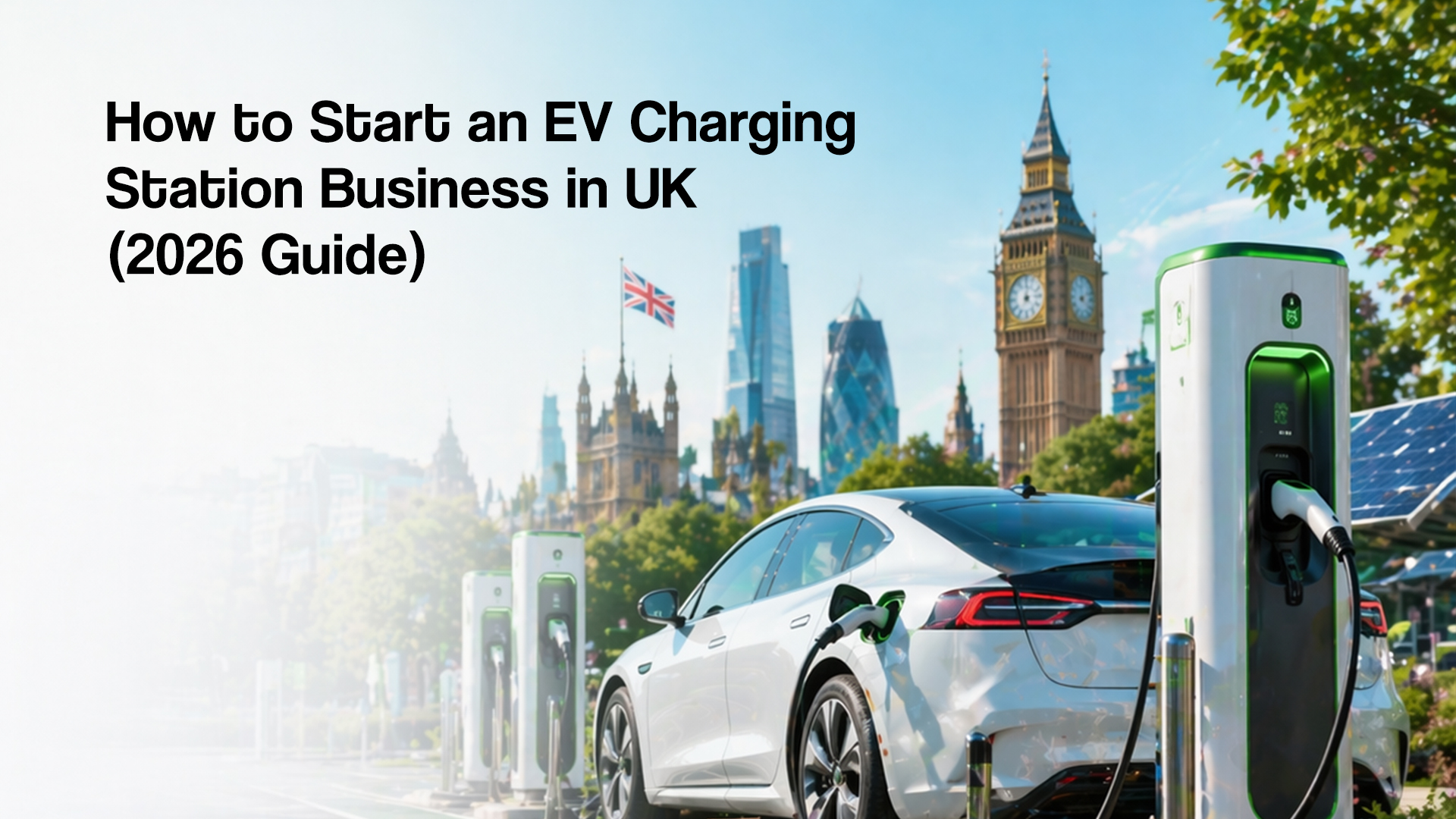
An EV charging station business in UK is becoming an increasingly attractive infrastructure opportunity. With over 121,000 public EV chargers installed by mid-2026 and more than 2.1 million battery electric cars on UK roads, demand for reliable charging infrastructure continues to grow.
This creates opportunities for entrepreneurs, businesses and property owners across retail, workplaces, commercial sites and fleet depots.
Whether you’re considering an AC installation or a DC rapid charging hub, understanding location, costs, regulations and revenue models is essential. This guide covers the key steps to starting a successful EV charging station business in UK in 2026.
Key Takeaways
- The UK public charging network passed 121,000 chargers by mid-2026, while EV adoption continues to increase.
- AC chargers typically suit locations with longer dwell times, while DC rapid chargers are better suited to high-turnover commercial and public charging sites.
- Installation costs vary considerably depending on charger power, site requirements and available grid capacity.
- Eligible businesses can receive support through government-backed EV charging grant programmes.
- Location, utilisation, electricity costs, pricing and charger uptime are among the biggest factors affecting profitability.
- Choosing a scalable charging platform can help businesses expand infrastructure as EV demand increases.
Why the UK EV Charging Market Still Has Room to Grow
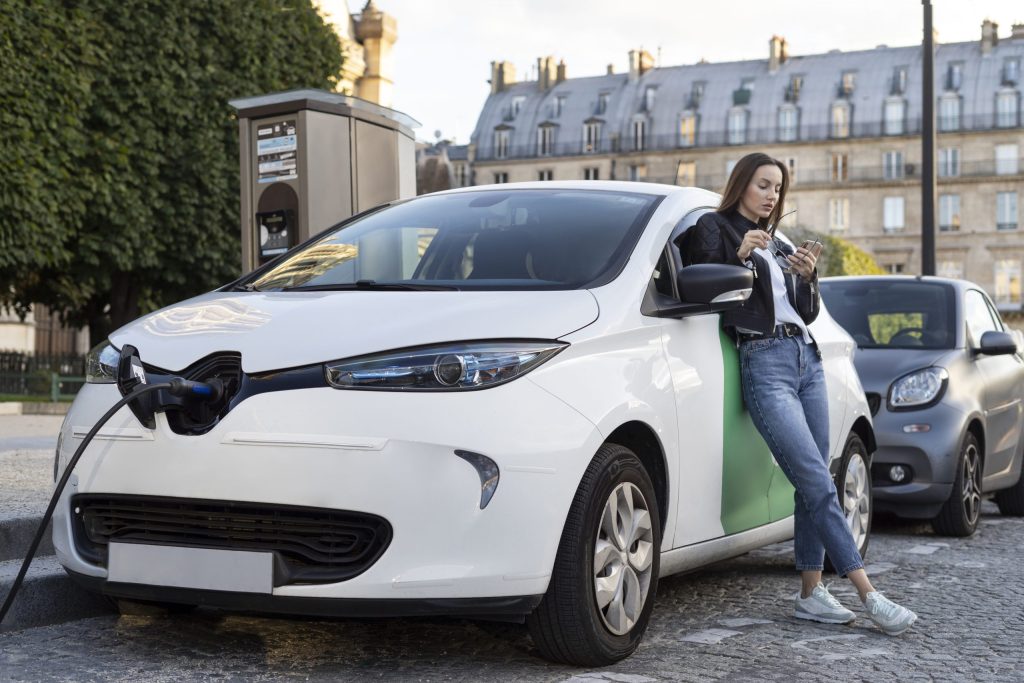
Electric vehicles made up around 23% of new car sales in the UK during 2025, up significantly compared with just a few years earlier, and EV adoption has continued to develop through 2026.
Despite the expansion of the public charging network, the rate of new charger installations has slowed compared with some previous periods while the number of electric vehicles on UK roads continues to increase.
For businesses considering EV charging infrastructure in UK, this creates an opportunity. Locations with strong vehicle traffic, suitable dwell times and limited nearby charging availability can potentially generate consistent demand.
Retail parks, hotels, workplaces, motorway locations, commercial properties and fleet depots can all have different charging requirements. Identifying where charging demand exists—and matching the right infrastructure to that demand—is therefore one of the most important steps when developing an EV charging business.
Choosing the Right Charger Type for Your Business
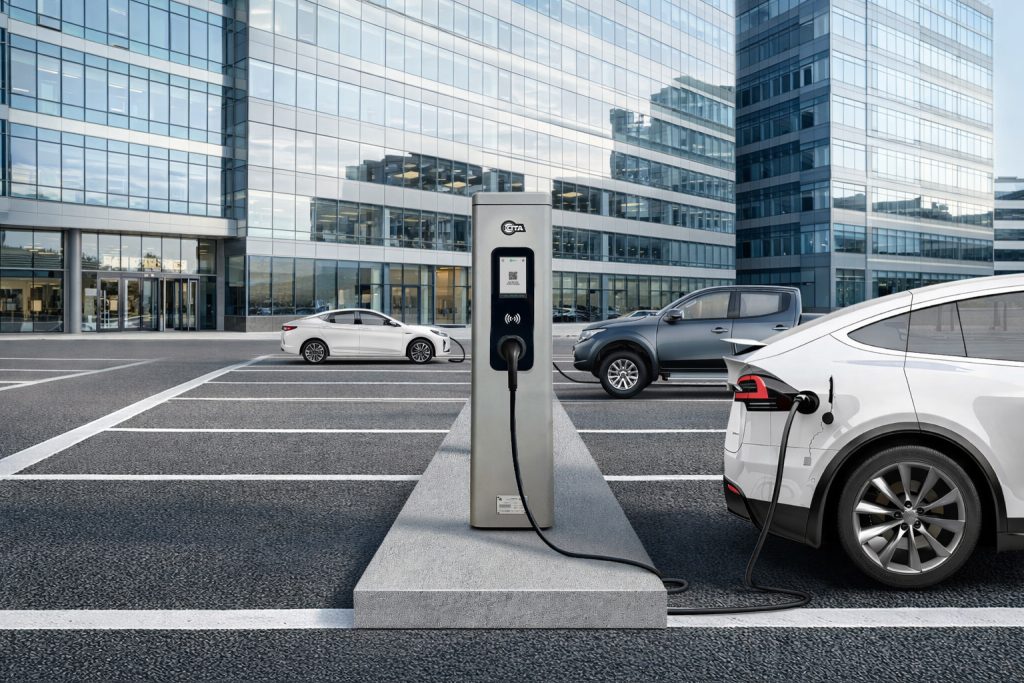
| Charger Type | Power Range | Best Suited For | Typical Charging Time | Investment Level |
|---|---|---|---|---|
| AC (Level 2) | 7kW–22kW | Workplaces, hotels, retail parking, apartments | 3–8 hours | Lower |
| AC (Dual/Commercial) | Up to 44kW | Offices, mixed-use commercial sites | 2–4 hours | Moderate |
| DC Fast/Rapid | 40kW–160kW | Retail hubs, service stations, fleet depots | 30–60 minutes | Higher |
| DC Ultra-Rapid | 200kW+ | Motorway services, high-traffic forecourts | 15–30 minutes | Highest |
AC EV Charging
Commercial AC chargers are generally a cost-effective starting point for locations where vehicles remain parked for several hours.
They can work particularly well for:
- Workplaces
- Hotels
- Residential developments
- Office buildings
- Destination charging
- Long-stay retail parking
The lower power requirements of AC chargers can also make installation simpler at sites with limited electrical capacity.
DC Rapid Charging
DC fast and rapid chargers are designed for locations where drivers need considerably shorter charging times.
Typical applications include:
- Public EV charging stations
- Retail parks
- Service stations
- Fleet depots
- High-traffic commercial locations
- Highway and motorway charging hubs
DC charging infrastructure requires a higher initial investment, particularly where electrical upgrades or new grid connections are required. However, faster charging enables higher vehicle turnover, which can make DC charging attractive for busy commercial locations.
Steps to Start an EV Charging Station Business in UK
Before getting started, it’s important to understand the key steps involved in building a compliant and commercially viable charging operation.
Here’s how to take your EV charging station business in UK from an initial concept to an operational charging site.
1) Research Your Market and Choose a Location
Location can influence the performance of an EV charging business more than almost any other factor.
High-traffic locations such as retail parks, motorway services, commercial centres and business hubs can potentially support higher charger utilisation. However, traffic volume alone isn’t enough.
Before selecting a location, consider:
- Local EV ownership
- Nearby charging infrastructure
- Competitor pricing
- Vehicle traffic
- Average dwell time
- Site accessibility
- Parking availability
- Visibility
- Available electrical capacity
A hotel where customers remain overnight, for example, may be better suited to AC charging. A roadside service station where drivers stay for only 20–40 minutes is more likely to require DC rapid charging.
Matching charger capacity with actual customer behaviour is essential.
2) Budget for the Real Cost of Installation
The cost of installing an EV charging station in UK varies considerably depending on charger type and site requirements.
A commercial AC charger represents a comparatively modest investment, while DC rapid and ultra-rapid installations can require substantially more capital.
Costs may include:
- EV charging hardware
- Electrical installation
- Groundworks
- Cabling
- Distribution equipment
- Grid connection
- Transformer upgrades
- Payment terminals
- Charging management software
- Signage and bay markings
- Maintenance
- Connectivity
- Ongoing electricity costs
Grid upgrades can represent a significant proportion of the overall cost of high-powered charging infrastructure.
For this reason, businesses should obtain both an installation assessment and grid capacity information before committing to a particular charger specification.
Ongoing operating expenses should also be included in the financial model from the beginning rather than treated as an afterthought.
3) Understand EV Charging Station Regulations in UK
Compliance should be considered during the planning stage rather than after chargers have been purchased.
Public charging operators need to understand the requirements of the Public Charge Point Regulations 2023, which introduced requirements covering areas including pricing transparency, contactless payments, payment roaming, reliability and open charge point data.
For relevant public rapid charging networks, the regulations also introduce reliability requirements.
Charging infrastructure may also need to support industry communication protocols. OCPP (Open Charge Point Protocol), for example, enables communication between EV chargers and compatible charging management platforms.
For open public charge point data, OCPI (Open Charge Point Interface) is relevant to the UK’s regulatory framework.
Depending on your installation, additional considerations may include:
- UK electrical safety standards
- Building regulations
- Local planning requirements
- Accessibility
- DNO approval
- Grid connection requirements
- Payment systems
- Data connectivity
Working with experienced charging infrastructure providers and qualified installers early in the project can help reduce delays during deployment.
4) Explore Available EV Charging Grants
Government-backed programmes can help eligible organisations reduce the upfront cost of installing charging infrastructure.
One of the most established programmes is the Workplace Charging Scheme (WCS).
From 1 April 2026, eligible applicants can receive support of up to £500 per charging socket, subject to scheme conditions and maximum limits. The scheme is currently scheduled to continue until 31 March 2027.
Depending on the organisation and location, other support programmes may also be available.
The Local Electric Vehicle Infrastructure (LEVI) programme, for example, supports local authorities in expanding public charging infrastructure, particularly for drivers without access to off-street parking.
Funding programmes and eligibility requirements can change, so businesses should check the latest government guidance before incorporating grants into their financial projections.
5) Plan Your Power Supply Early
One of the most overlooked parts of developing a commercial EV charging station is electrical capacity.
Higher-powered DC chargers can place significant demand on an existing electrical connection.
Before choosing your charger, assess:
- Existing site capacity
- Maximum electrical demand
- Number of chargers planned
- Future expansion
- DNO requirements
- Transformer capacity
- Load management options
Contacting the relevant Distribution Network Operator (DNO) early can help identify whether grid reinforcement will be required.
For multi-charger installations, smart energy and dynamic load management systems can distribute available power between chargers based on demand.
This can help businesses make better use of existing electrical capacity and potentially reduce the need for expensive infrastructure upgrades.
6) Pick an EV Charging Business Model That Fits Your Site
There is no single EV charging business model that works for every location.
The right approach depends on who will use the chargers, how long they stay and why charging is being provided.
Pay-per-kWh: Drivers pay according to the electricity consumed during each charging session. This is common across public charging networks.
Pay-per-session: Customers pay a fixed amount for a charging session.
Subscription Charging: Regular users or fleets pay a recurring subscription for access to charging infrastructure.
Destination Charging: Hotels, shopping centres and other businesses may provide charging as an additional customer service rather than treating electricity sales as the primary source of revenue.
Fleet Charging: Commercial fleets may operate dedicated charging infrastructure based on scheduled vehicle movements and predictable energy requirements.
Choosing the model around your users—rather than simply copying another charging network—can help create more sustainable utilisation.
7) How Does an EV Charging Station Business Make Money?
An EV charging station business in UK can generate value in several different ways.
The most obvious is charging drivers for the electricity consumed. However, electricity sales are not the only potential source of commercial value.
Charging Revenue
Public charge point operators can generate revenue by applying a charging tariff per kWh or through other permitted pricing models.
Increased Customer Dwell Time
Retailers, hotels and hospitality businesses can use EV charging to encourage customers to spend longer at their location.
Fleet Charging Contracts
Businesses operating fleet or depot charging infrastructure can potentially create more predictable demand through commercial fleet agreements.
Membership and Subscription Models
Regular users may be offered subscription-based access, discounted charging tariffs or membership programmes.
Additional Commercial Revenue
Charging sites can also support other revenue opportunities, including retail purchases, food and beverage sales, parking and advertising.
The most suitable revenue model depends heavily on the location and customer profile.
8) Work With Qualified EV Charger Installers
Professional installation is essential for safety, reliability and regulatory compliance.
Qualified EV charger installers can help ensure that charging equipment is installed correctly and integrated with relevant electrical infrastructure, payment systems and charging management software.
An experienced installation team can also assist with:
- Site surveys
- Electrical assessments
- Charger positioning
- Groundworks
- Cabling
- Commissioning
- Connectivity
- Load management
- Testing
- Ongoing maintenance
For commercial charging infrastructure, installation should also consider future expansion.
Installing a site that can support additional chargers later can be more cost-effective than rebuilding electrical infrastructure when demand increases.
Ready to Start Your EV Charging Station Business in UK?

Starting an EV charging station business in UK requires more than choosing a charger and finding a location. The right combination of site demand, available power, charging capacity, installation costs, operating expenses and a scalable management strategy will ultimately determine the long-term performance of your charging business.
Whether you’re planning workplace charging, a commercial destination, fleet infrastructure or a high-powered public charging hub, CITA EV offers a comprehensive range of commercial AC and DC charging solutions designed around different business and operational requirements.
From smart AC charging for workplaces and destinations to high-powered DC charging for public networks, fleets and commercial charging hubs, CITA EV can support businesses in selecting charging infrastructure that matches their site requirements and future growth plans.
Planning an EV charging station for your business in the UK?
Speak with the CITA EV team to discuss your site, charging requirements and the right AC or DC charging solution for your project.
Frequently asked questions
Costs vary significantly depending on charger type and site requirements. A single commercial AC charger can represent a comparatively modest investment, while DC rapid or ultra-rapid infrastructure can cost tens of thousands of pounds once grid upgrades, electrical infrastructure and installation are included.
A detailed site assessment is recommended before estimating the total project cost.
It can be. However, profitability depends heavily on location, charger utilisation, electricity costs, pricing, installation costs and uptime.
A well-positioned charger with consistent utilisation can perform considerably better than a more powerful charger installed where charging demand is low.
It depends on the site and scale of the installation.
Larger DC installations, substantial groundworks, equipment enclosures and grid infrastructure may require additional planning approval. Businesses should check with their local planning authority and relevant DNO during the early stages of the project.
AC chargers are generally more affordable and are suited to locations where vehicles remain parked for several hours, including workplaces, hotels and residential developments.
DC chargers provide considerably faster charging and are better suited to high-turnover locations such as public charging hubs, retail parks, fleet depots and service stations.
Yes. Eligible businesses and organisations may qualify for government-backed charging grants.
The Workplace Charging Scheme is one example, offering eligible applicants support towards EV charger installation. Other programmes may also be available depending on the organisation, property type and location.
Because grant values and eligibility requirements can change, businesses should check current government guidance before budgeting for an installation.