 Skip to content


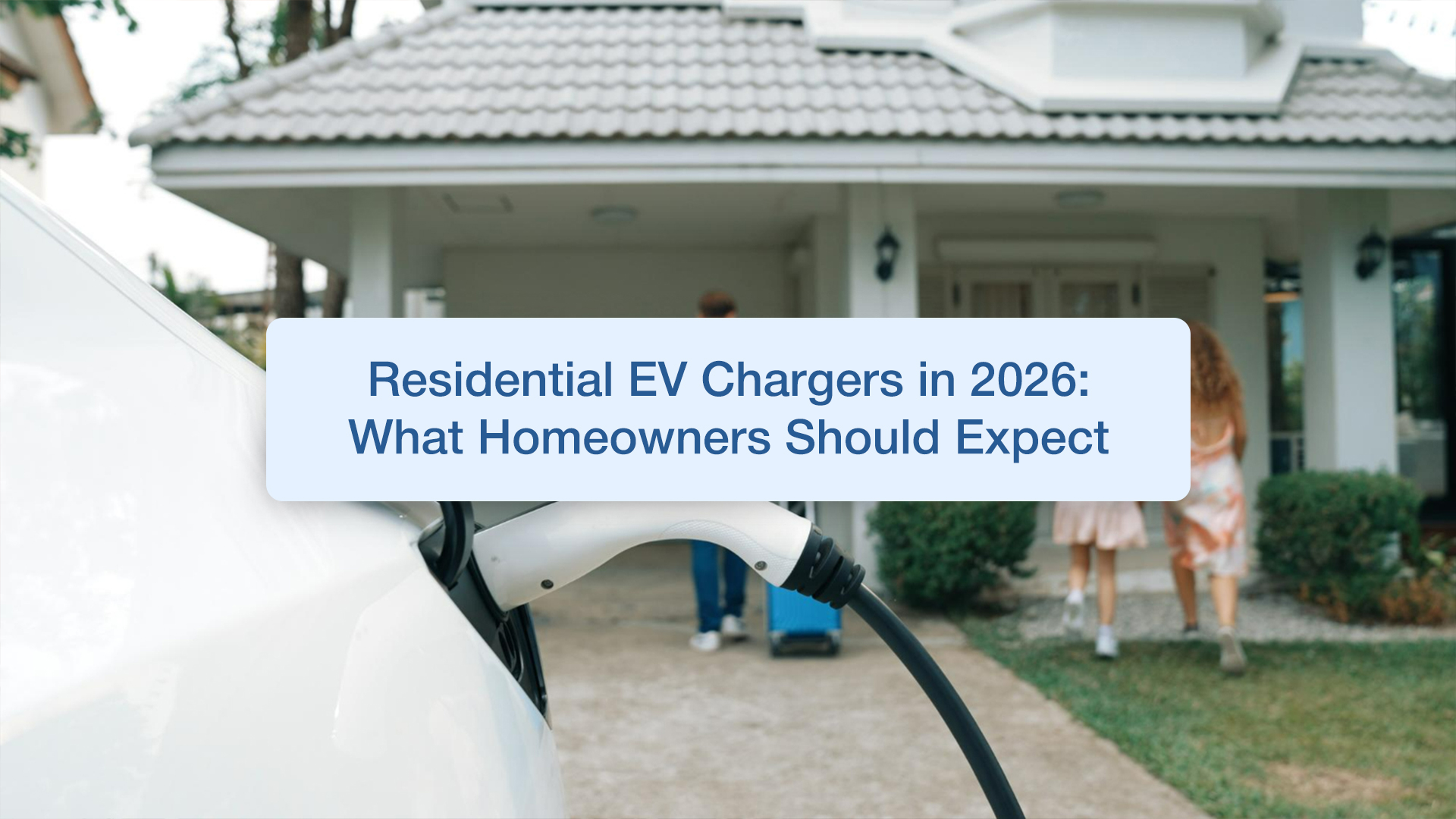
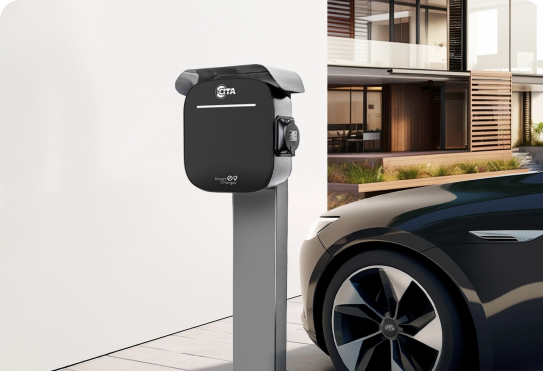
Residential EV Chargers in 2026 are becoming a central part of modern UK homes, driven by rapid electric vehicle adoption, rising fuel costs, and stricter emissions targets.
According to UK government data and industry forecasts, millions of households are expected to rely on home ev charger installations by the end of this decade, making domestic ev charging no longer a luxury – but a necessity. As 2026 approaches, homeowners are not just asking whether to install ev chargers, but what kind of charging experience they should expect.
The UK Home EV Charging Landscape Is Evolving

The UK has moved well beyond the early-adopter phase of electric vehicles. With petrol and diesel car sales set to end by 2035 and strong momentum toward electrification, residential electric car charger demand is accelerating. In 2026, most EV charging will still happen at home, but the expectations around speed, safety, reliability, and intelligence are changing.
Homeowners are increasingly aware that installing a residential ev charger in uk is not just about plugging in a cable. It’s about integrating charging into daily life – overnight charging, smart energy use, and seamless compatibility with the grid.
What Homeowners Will Expect From Residential EV Chargers in 2026
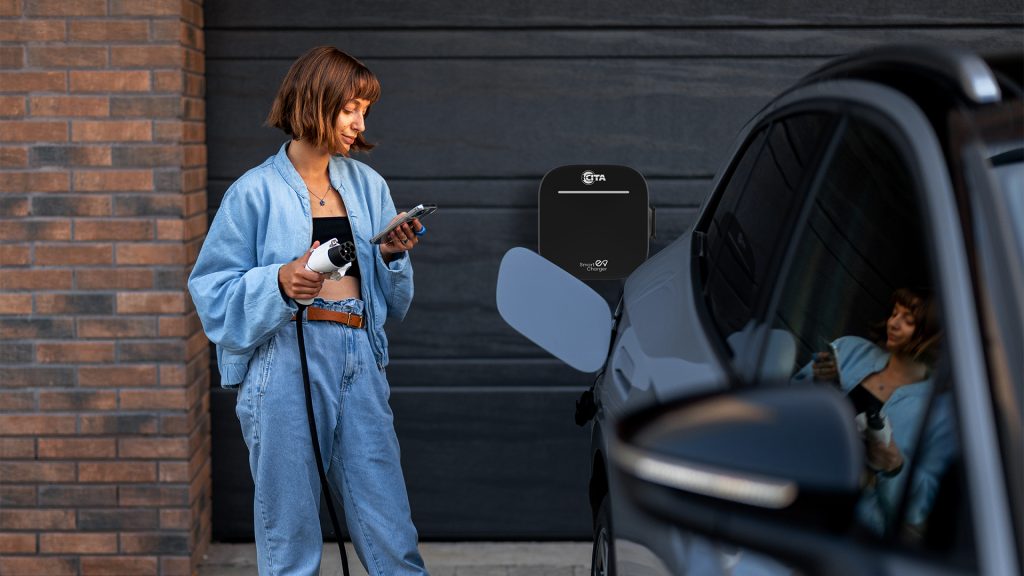
As electric vehicles become a permanent part of UK households, expectations around residential EV chargers are evolving rapidly.
By 2026, homeowners will look for reliable, intelligent, and well-integrated EV charging solutions that align with everyday home energy use.
1) Smart Charging as a Standard Requirement
By 2026, homeowners will expect residential EV chargers to include smart functionality as standard. Features such as app-based control, scheduled charging, energy monitoring, and remote diagnostics will no longer be considered optional.
With a growing number of UK EV owners using time-of-use electricity tariffs, smart EV charging that aligns with off-peak rates or solar generation will play a key role in reducing charging costs and improving energy efficiency.
2) Charging Power Designed for Everyday Home Use
Residential EV charging in the UK will continue to rely mainly on AC charging, but homeowners will be far more informed about selecting the appropriate power output. 7 kW home EV chargers will remain the most common choice for overnight charging and daily commuting needs.
Meanwhile, 22 kW AC chargers, where grid capacity allows, will be viewed as future-ready solutions for households with higher mileage requirements or multiple electric vehicles. The focus will be on practical charging speeds rather than maximum output.
3) Higher Expectations for Safety and Build Quality
As the number of home installations increases, safety and durability will become central decision factors.
By 2026, homeowners will expect electric vehicle chargers to perform reliably in the UK’s varied climate and withstand accidental impact and long-term outdoor exposure.
EV Chargers with IP65 protection against dust and water and IK10 impact resistance are increasingly regarded as minimum standards, particularly for outdoor and driveway installations.
4) Integration With Home Energy Infrastructure
Modern EV charging solutions are expected to work seamlessly with broader home energy systems. In Residential EV Chargers in 2026, homeowners will look for EV chargers that integrate with solar PV systems, home battery storage, smart meters, and dynamic energy tariffs.
The residential EV charger in UK homes will increasingly function as part of a connected energy ecosystem, helping balance household electricity demand, reduce costs, and support grid stability.
5) App-Based Control as a Core User Experience
In 2026, the quality of the mobile app will strongly influence how homeowners perceive their home EV charger. A reliable app like the CITA EV App should allow users to start or stop charging remotely, schedule sessions, monitor electricity consumption, and receive system notifications.
For many first-time EV owners, this digital interface will be the primary point of interaction, making clarity, reliability, and ease of use essential.
6) Clear and Transparent Installation Processes
Installation expectations are also evolving. UK homeowners increasingly expect clear guidance on electrical capacity, informed advice on single-phase versus three-phase supply, and installations that fully comply with UK regulations.
As awareness grows, more homeowners are prioritising experienced installers and established EV charging solutions over lower-cost alternatives that may compromise safety or performance.
7) Reliability as a Key Decision Factor
By 2026, homeowners will place less emphasis on branding and more on consistent, dependable performance. A home EV charger is used frequently – often overnight – and reliability is critical.
Homeowners will expect uninterrupted charging, stable performance throughout the year, and ongoing firmware support. This shift is driving greater trust in manufacturers known for strong engineering standards and long-term residential reliability.
8) Preparing Homes for Multiple Electric Vehicles
Multi-EV households are becoming increasingly common across the UK. As a result, homeowners are planning charging infrastructure with future expansion in mind.
Expectations include load-balancing capabilities, scalable EV charging solutions, and intelligent power management to prevent overloading household electrical systems. Forward planning is now a core consideration when selecting a residential EV charger.
CITA EV Charger: Shaping the Future of Residential EV Charging
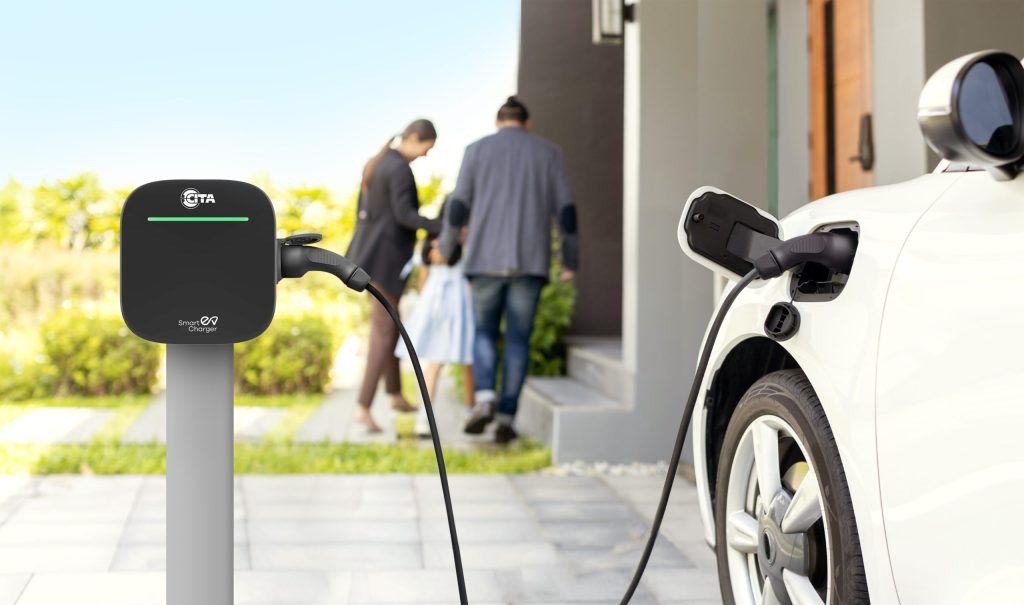
As the UK moves deeper into electrified transport, Residential EV Chargers in 2026 represent far more than a basic utility – they are becoming a core part of modern living. Homeowners will expect smarter control, dependable safety, seamless energy integration, and EV charging solutions that operate reliably every day without disruption.
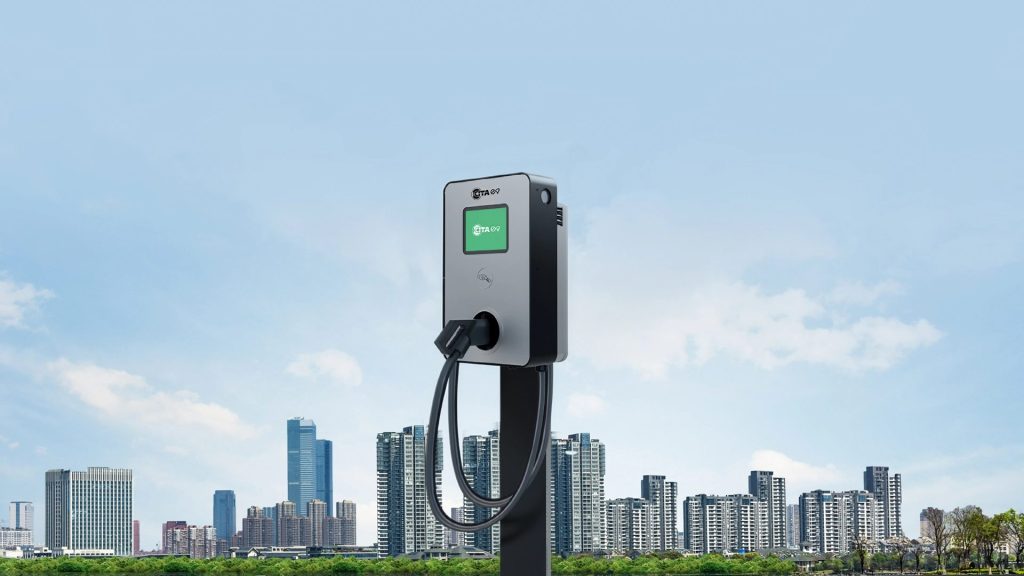
For homeowners exploring reliable home EV charger options, future-ready AC systems – such as 7 kW and 22 kW chargers with strong safety ratings, intelligent EV apps, and durable construction – are increasingly seen as the most practical and long-term choice. These systems align with real household energy use, overnight charging habits, and evolving electricity tariffs across the UK.
Manufacturers such as CITA EV Charger are gaining recognition for delivering residential-focused EV charging systems designed around UK homes, local energy patterns, and long-term reliability – rather than short-term performance claims.
If you’re planning your home’s EV charging setup with 2026 and beyond in mind, investing in a well-engineered, smart residential charging solution today can help ensure efficiency, safety, and future readiness.
Book a free EV charging consultation with our team to assess your home’s requirements and explore a charging solution designed for the next generation of electric mobility.