 Skip to content

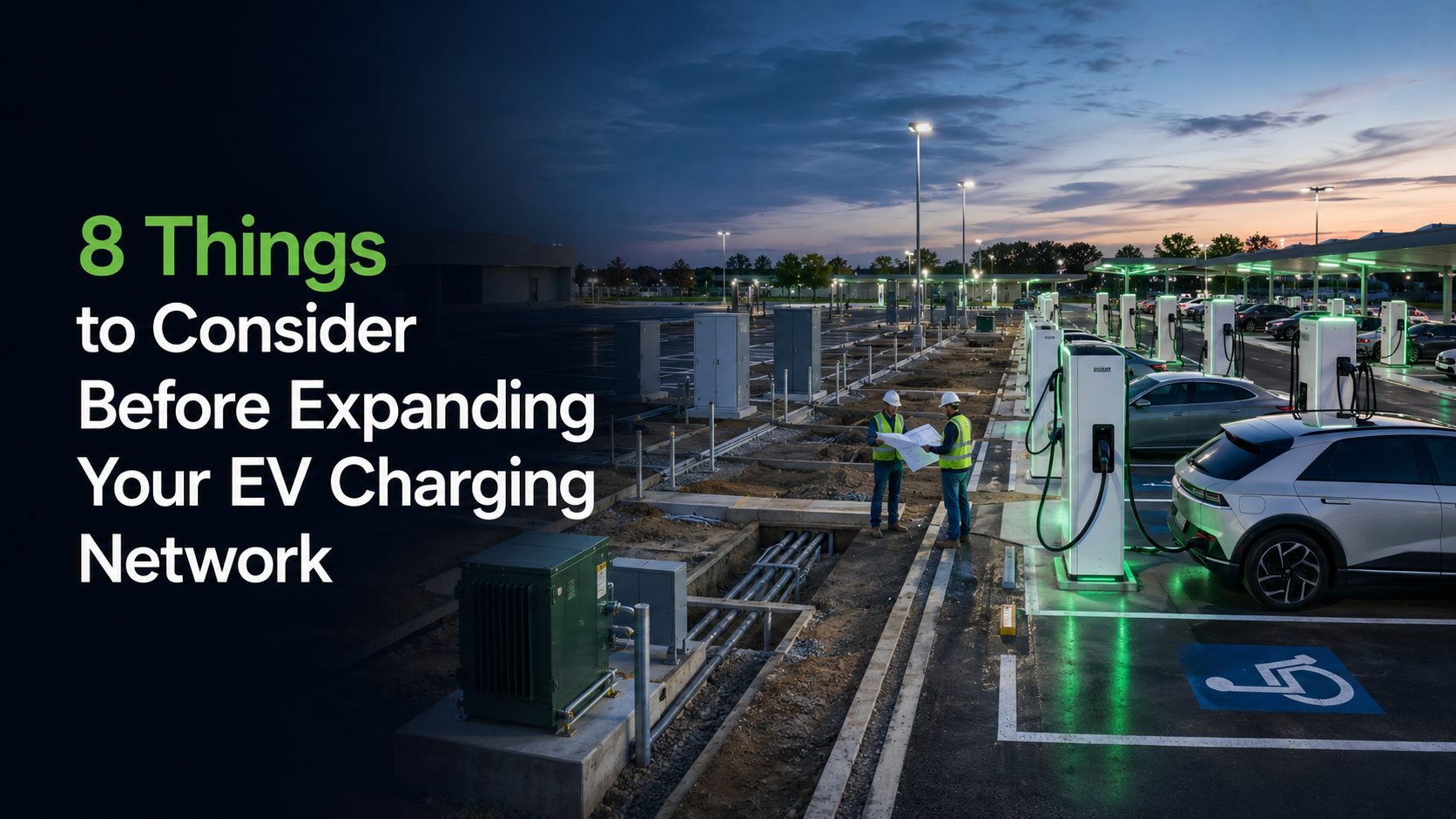
The UK’s EV charging market is entering a new phase of growth. In the first quarter of 2026 alone, more than 3,000 new public EV chargers were added across the country, demonstrating the continued pace of infrastructure expansion.
At the same time, businesses are shifting their focus from simply increasing charger numbers to building smarter, more reliable, and scalable charging networks. Whether you’re a Charge Point Operator (CPO), fleet operator, commercial property owner, retailer, local authority, or hospitality business, expanding successfully requires careful planning.
Evaluating the right technical, operational, and commercial factors can improve charger utilisation, enhance the user experience, and maximise long-term return on investment.
Planning a Successful EV Charging Network Expansion
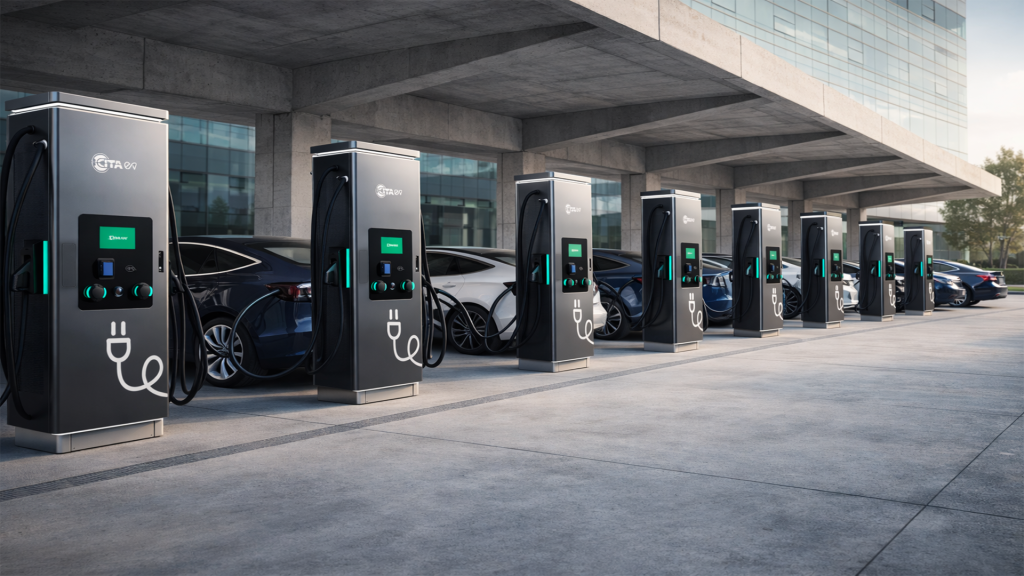
Expanding an EV charging network requires much more than increasing the number of charging points. From power availability and software integration to site selection and future scalability, every decision affects operational efficiency, user satisfaction, and return on investment.
Here are eight important factors every business should evaluate before expanding its charging infrastructure.
1) Evaluate Current Charger Performance Before Expanding
The first step is understanding how your existing charging network is performing. Analyse charger utilisation rates, peak usage hours, charging session duration, downtime, and customer feedback.
If certain locations consistently experience queues while others remain underutilised, expansion should focus on demand-driven locations rather than simply increasing charger numbers across all sites. Performance data provides valuable insights into where additional chargers will deliver the greatest impact.
2) Ensure Your Electrical Infrastructure Can Support Future Growth
One of the biggest challenges during expansion is available electrical capacity.
Before installing additional EV chargers, conduct a comprehensive assessment of your existing EV Charging Infrastructure. Evaluate transformer capacity, grid availability, distribution boards, cable routing, and future electrical demand.
If electrical upgrades are required, planning them early can significantly reduce installation delays and unexpected project costs.
3) Choose the Right Charger Mix for Your Users
Not every location requires ultra-fast charging.
A successful expansion strategy includes selecting charging solutions based on customer behaviour and dwell time.
For example:
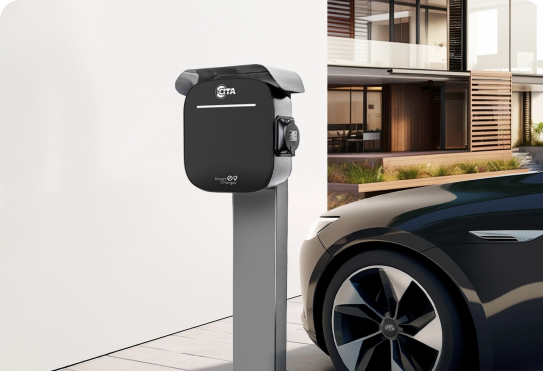
- AC chargers work well for workplaces, hotels, apartments, and offices.
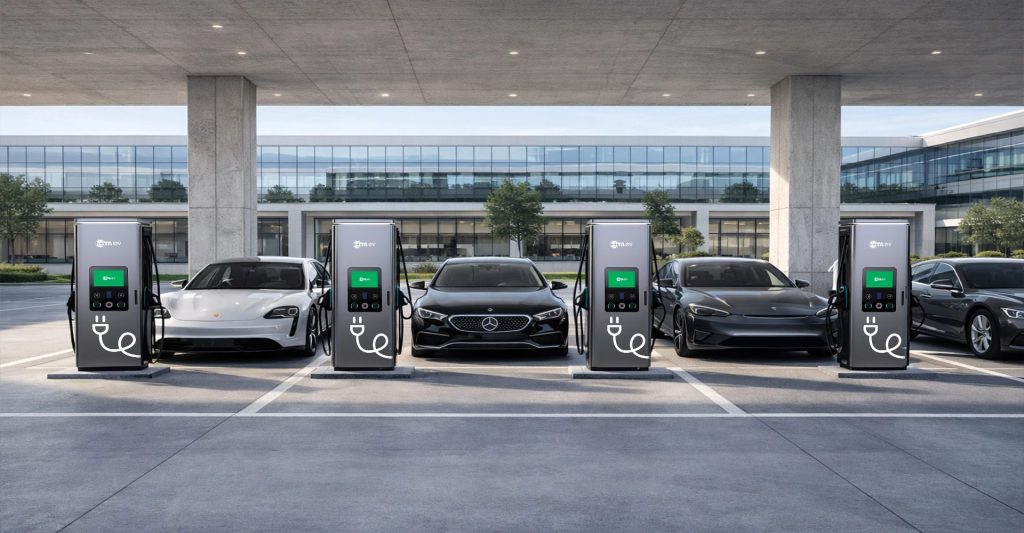
- DC Fast Charging Stations are ideal for motorway services, retail centres, fuel stations, logistics hubs, and fleet depots where faster turnaround is essential.
Choosing the right combination improves utilisation while avoiding unnecessary infrastructure investment.
4) Prioritise Scalable Software and Smart Network Management
Adding more chargers also increases operational complexity.
An advanced EV Charging Management System enables operators to remotely monitor chargers, manage users, perform diagnostics, update firmware, control pricing, generate reports, and optimise network performance from a single platform.
As your network grows across multiple locations, centralised management becomes essential for maintaining uptime and delivering a consistent customer experience.
5) Plan for Future EV Adoption, Not Just Today's Demand
Many businesses underestimate how quickly EV adoption is increasing.
Instead of installing EV chargers only for current demand, design your expansion with future growth in mind. Consider reserving electrical capacity, installing larger cable ducts, preparing additional parking bays, and selecting chargers that can be upgraded through software or modular hardware.
This approach minimises future disruption while reducing long-term expansion costs.
6) Select Locations That Maximise Utilisation
Successful charging locations are chosen strategically rather than conveniently.
When evaluating new sites, consider factors such as:
- Daily vehicle traffic
- Nearby amenities
- Driver dwell time
- Accessibility
- Visibility
- Safety
- Existing charging competition
Businesses investing in EV Charging Station Expansion should prioritise locations where charging naturally fits into customer journeys, helping maximise charger utilisation and revenue.
7) Build a Reliable and Flexible Commercial Charging Strategy
Every commercial site has different charging requirements.
Retail centres, hotels, offices, industrial parks, logistics hubs, hospitals, universities, and public parking facilities all have unique usage patterns. Choosing flexible Commercial EV Charging Solutions allows businesses to adapt to changing customer demand while supporting future vehicle technologies.
A scalable commercial strategy ensures your investment continues delivering value as EV adoption grows.
8) Work with an Experienced Charging Partner
Expanding an Electric Vehicle Charging Network involves much more than hardware installation.
The right technology partner should provide support throughout the project, including:
- Site surveys
- Electrical assessments
- Site mapping
- Charger selection
- Installation guidance
- Commissioning
- Software integration
- Training
- Ongoing technical support
- Future expansion planning
Choosing an experienced manufacturer and solutions provider helps minimise project risks while ensuring reliable long-term operation.
Expand Your EV Charging Network with Confidence

A successful EV Charging Network expansion isn’t measured by the number of chargers installed – it’s measured by reliability, scalability, user experience, and long-term profitability. Careful planning today can reduce operational challenges tomorrow while preparing your business for continued EV growth across the UK.
Planning to Expand Your EV Charging Network?
At CITA EV Charger, we help businesses design scalable, future-ready charging ecosystems tailored to their operational goals. From detailed site mapping and electrical assessments to selecting the right AC and DC charging solutions, CPMS integration, installation support, and future expansion planning, our team supports you at every stage.
Whether you’re adding a few chargers or building a nationwide charging network, we’re here to help.
Contact CITA EV Charger today to discuss your EV charging expansion project and discover the right solution for your business.