 Skip to content


The UK now has more than 2 million battery electric cars on the road, and most charging still happens overnight, at home, rather than at a public station. That shift has made one question increasingly common among new EV owners: how do you actually install an EV charger at home, and what does it involve in 2026?
The good news is that the process is now more standardised than ever. A typical 7kW home installation now costs somewhere between £800 and £1,200, government grant rules have changed significantly since the scheme first launched, and every new home charger sold in the UK must meet smart-charging regulations introduced in 2022. This guide walks through the full process step by step, so you know what to expect before you book an electrician.
Key Takeaways
- Most UK homeowners can install an EV charger at home for between £800 and £1,200, including the unit and professional fitting.
- The OZEV EV Chargepoint Grant no longer applies to standard homeowners with a driveway; it’s now limited to renters, flat owners, and landlords, worth up to £500 per socket from April 2026.
- A 7kW charger typically fully charges an EV overnight, while 11kW or 22kW units need a three-phase supply to charge faster.
- Under UK smart charging regulations, every new home charger must have smart functionality built in.
- Planning permission usually isn’t required, provided the unit meets size and placement rules.
Why Install a Home EV Charger?
Before getting into the process, it’s worth being clear on why home charging remains the preferred option for most EV owners. Charging overnight means your car is ready every morning without a trip to a public station.
It also gives you access to cheaper off-peak electricity tariffs, some as low as 7p to 10p per kWh, cutting running costs compared with public charging. A dedicated charge point is faster and safer than a standard three-pin plug, and a professionally fitted unit can also be a selling point if you come to move house.
Step-by-Step: How to Install an EV Charger at Home
Installing a home EV charger involves more than simply choosing a charger and connecting it to your electricity supply. The process requires the right charger, a suitable electrical setup and professional installation to ensure reliable everyday charging.
Here’s a simple step-by-step overview of how the installation process typically works.
Step 1: Assess Your Property and Electrical Supply
The first step when you plan to install an EV charger at home is understanding what your property can support. A qualified electrician will check your consumer unit’s capacity, the condition of your existing wiring, and whether your supply can handle the extra load a charger adds.
Many homes built before 2000 need some upgrade work, such as a new consumer unit or additional protective devices, before a charger can be safely fitted.
Step 2: Choose the Right Charger for Your Home
Most UK households go for a 7kW smart charger, which is fast enough to fully charge a typical EV overnight on a single-phase supply. If your home has a three-phase electricity supply, 11kW or 22kW units are available and will charge significantly faster, though few daily drivers actually need that extra speed.
Look for chargers with a Type 2 connector, IP65 weatherproofing, IK10 impact resistance, and app-based scheduling, since these features affect both durability and long-term running costs.
Step 3: Confirm Planning Permission Isn't Needed
In most cases, you won’t need planning permission for a home charge point in the UK. Chargepoints are generally covered under permitted development rights, provided the unit is under 0.2 cubic metres in volume and, if wall-mounted, doesn’t face directly onto a highway or sit within two metres of a road.
Listed buildings and properties in conservation areas may have extra restrictions, so it’s worth checking with your local planning authority if either applies to you.
Step 4: Book a Certified Installer
This is not a DIY job. UK regulations require home chargepoint installations to be carried out by a qualified electrician, in line with BS 7671 wiring regulations and Part P of the Building Regulations.
A certified installer will also confirm your setup meets EV charger installation regulations in the UK and issue the paperwork needed for warranty, insurance, and any grant applications.
Step 5: Installation Day
On the day, your installer will mount the unit on your chosen wall or pedestal, run and connect the cabling back to your consumer unit, and fit any required protective devices such as RCBOs. For most straightforward jobs, this takes half a day to a full day.
Longer cable runs, trenching, or a consumer unit upgrade will extend the timeline.
Step 6: Testing, Certification, and App Setup
Once fitted, the installer tests the unit for safety and functionality and confirms it’s compatible with your specific EV. You’ll then be shown how to set up the connected app, schedule off-peak charging sessions, and monitor your energy use.
You should receive an installation certificate and warranty documentation to keep for your records.
Cost to Install an EV Charger at Home in 2026

Costs for a standard installation have settled in recent years. As of 2026, most homeowners can expect to pay between £800 and £1,200 for a 7kW smart charger and professional fitting, covering the unit itself, cabling, mounting, and certification.
Straightforward jobs with a short cable run and an accessible consumer unit sit toward the lower end, while installations that need a consumer unit upgrade, trenching, or a longer cable run can push costs closer to £1,500 to £2,500. Three-phase 11kW or 22kW installations generally cost more due to the additional wiring work involved.
OZEV Grant: What's Changed for 2026

Older guides often suggest that most UK homeowners can claim government funding toward their installation. That’s no longer accurate. Since April 2022, the OZEV EV Chargepoint Grant has been restricted to renters, flat owners, and landlords rather than homeowners with driveways.
From April 2026, the grant increased from £350 to up to £500 per socket, covering 75% of the combined purchase and installation cost, and funding is confirmed until March 2027.
If you fall into one of the eligible categories, you’ll need to use an OZEV-authorised installer and apply through the government’s Find a Grant platform before your installation is completed. Businesses installing multiple chargers may still qualify for the separate Workplace Charging Scheme.

Smart Charging Regulations You Should Know
Since 2022, UK regulations have introduced specific smart charging requirements for new home and workplace EV chargers.
Key points include:
- Smart functionality: New chargers covered by the regulations must include smart charging capabilities.
- Off-peak charging: Chargers must incorporate preset off-peak charging hours, helping shift charging away from periods of high electricity demand.
- Charging schedules: Users can manage and schedule charging according to their requirements rather than charging immediately every time the vehicle is plugged in.
- Cybersecurity requirements: Chargers must meet security requirements designed to protect the device and its communications.
- Compliance matters: When choosing a new home EV charger, make sure the model complies with the UK’s Electric Vehicles (Smart Charge Points) Regulations 2021.
01
Determine the ideal location for the home electric vehicle charging setup based on accessibility.
02
03
04
05
What are the requirements for a home EV charger installation?
Your home must have an electrical system capable of supporting the additional load of a home electric vehicle charging setup.
For faster charging, a dedicated circuit may be required to handle the power demand of a 7 kW, 11 kW, or 22 kW home EV charger.
Ensure the installation meets EV charger installation regulations UK, including safety and building standards.
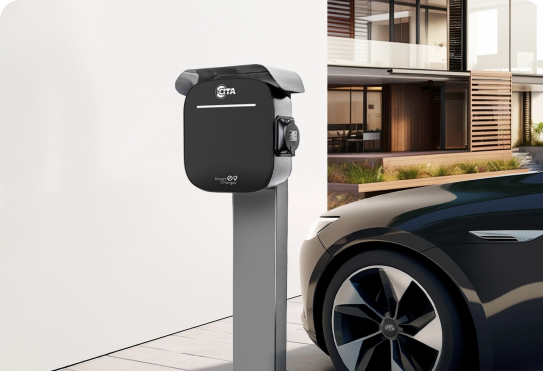
Use certified professional EV charger installation services, like those offered by CITA EV, to ensure compliance.
A suitable location, such as a garage wall or driveway, is essential for installing the best home EV charger.
The site should allow for convenient access to the vehicle and protection from weather conditions if the charger is mounted outdoors.
Select a charger compatible with your electric vehicle. CITA EV chargers are designed for universal home EV charger compatibility with all EV models.
Choose durable, weatherproof chargers, like IP65 and IK10-rated options from CITA EV, for added reliability.
Many modern chargers, including those from CITA EV, offer smart features that require Wi-Fi connectivity for app control and energy monitoring.
Ensure your location has a stable internet connection to utilize these advanced features fully.
A site survey by a qualified technician ensures your electrical system and property meet the requirements for safe and efficient installation.
With CITA EV, you receive expert support to evaluate your property and determine the best setup.

Common Mistakes to Avoid
A few avoidable errors come up repeatedly during home charger installations:
- Skipping the electrical assessment. Fitting a charger without checking your supply capacity first can lead to nuisance tripping or, in rare cases, a genuine safety risk.
- Choosing an uncertified installer to save money. This can void your warranty, invalidate your home insurance, and disqualify you from any grant you might be eligible for.
- Ignoring cable routing and future needs. A cheap, short-term fix can be expensive to redo if you later add solar panels or a second EV.
- Overlooking weatherproofing. Outdoor-mounted chargers need proper IP and IK ratings to hold up to UK weather over several years.


Up to 3 years warranty (extendable)


Compatible with all type 2 charging cables


Active & Dynamic Load Balancing


Built-in 4G router

Modbus Integration to Solar PV & Smart System

IP65 and IK10 Rated EV Charger
Ready to Make Home EV Charging Easier?
Installing an EV charger at home can make everyday EV ownership simpler, more convenient and easier to manage. With the right electrical setup, a compliant smart charger and professional installation, you can create a reliable charging solution that fits naturally into your daily routine.
Understanding your property requirements, charger options and UK regulations before installation also helps you make a more informed long-term investment.
Ready to charge smarter at home? Explore CITA EV’s home charging solutions and get in touch with our team to find the right EV charger for your property.

Frequently asked questions
Most homeowners pay between £800 and £1,200 for a standard 7kW smart charger installation in 2026. Costs can rise to £1,500–£2,500 if your consumer unit needs upgrading or the cable run is long.
Usually not. Home chargepoints are generally covered under permitted development rights, provided the unit is under 0.2 cubic metres and, if wall-mounted, isn’t within two metres of a highway. Listed buildings and conservation areas may have extra rules.
Only if you’re a renter, flat owner, or landlord. Standard homeowners with a driveway have not been eligible since April 2022. Eligible applicants can claim up to £500 per socket from April 2026 via an OZEV-authorised installer.
No. UK regulations require installation by a qualified electrician in line with BS 7671 wiring standards and Part P Building Regulations. DIY installation isn’t legally recognised, can invalidate your insurance, and will disqualify you from any grant funding.
A 7kW charger is the standard choice for most single-phase UK homes and can fully charge a typical EV overnight. 11kW and 22kW chargers charge faster but require a three-phase electricity supply, which not all homes have.