 Skip to content


Installing an EV charger is rapidly becoming more than a sustainability initiative for commercial property owners. As electric vehicle adoption continues to grow across the UK and globally, businesses are increasingly recognizing EV charging as a valuable opportunity to generate passive income, attract customers, enhance property value, and future-proof their operations.
From hotels and office buildings to retail centres and commercial car parks, EV charging infrastructure can create long-term revenue opportunities while meeting the growing demand for convenient charging access.
Recent developments further highlight the long-term opportunity. In June 2026, BYD announced plans to invest €2 billion in expanding ultra-fast EV charging infrastructure across Europe, including the UK, with thousands of new charging points planned over the coming years. Major retailers and businesses are also continuing to expand their charging networks to meet growing EV demand.
These developments highlight a clear market trend: demand for EV charging is increasing, creating new opportunities for businesses that invest in charging infrastructure today.
Why Commercial Properties Are Investing in EV Charging
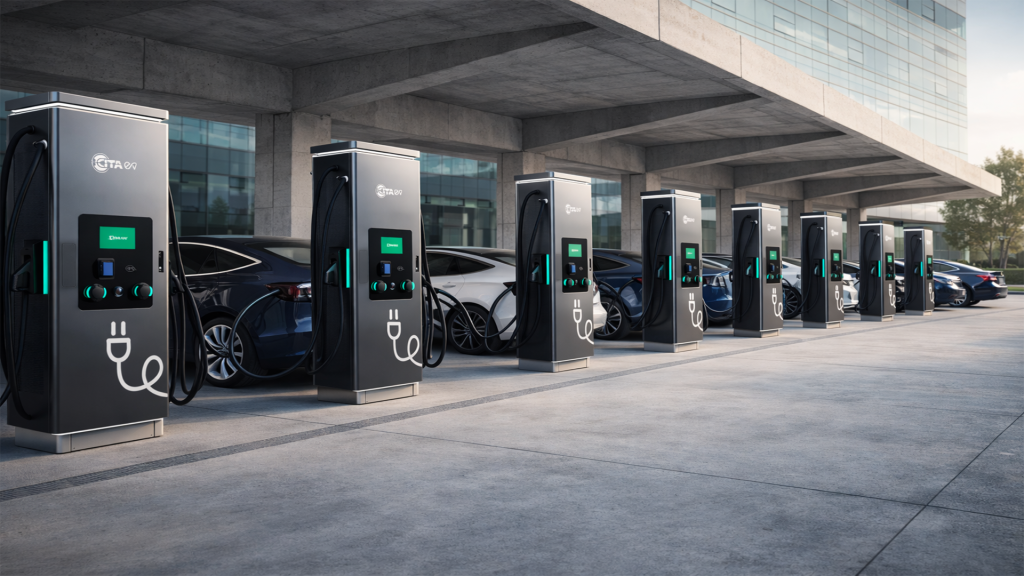
The conversation around EV charging has evolved significantly over the past few years.
Initially viewed as a sustainability feature, EV chargers are now increasingly recognized as a valuable business asset. As more consumers, employees, tenants, and fleet operators adopt electric vehicles, access to charging has become an important consideration when choosing where to work, shop, stay, or park.
This has created a strong business case for:
- Generating passive income from EV charging
- Attracting new customers and tenants
- Increasing customer dwell time
- Supporting ESG and sustainability objectives
- Enhancing property value
- Preparing for future transportation trends
For many organizations, installing an EV charger represents an opportunity to serve a growing market while creating long-term revenue potential.
How EV Chargers Generate Passive Income

One of the biggest misconceptions about EV charging is that it only benefits EV drivers. In reality, commercial charging infrastructure can provide financial advantages for property owners as well.
1) Charging Fees from EV Drivers
The most straightforward revenue model involves charging users for electricity consumption.
Businesses can establish pricing structures based on:
- Per kWh usage
- Session fees
- Time-based charging rates
- Parking and charging bundles
- Membership or subscription plans
This approach allows businesses to recover energy costs while generating additional income from charger usage.
For sites with consistent vehicle traffic, installing an EV charger can create a recurring source of revenue with relatively low ongoing management requirements.
2) Public Charging Revenue
Commercial properties located near busy roads, city centres, shopping districts, or transportation corridors often benefit from public charging demand.
Many EV drivers actively search for nearby charging stations while travelling. This creates opportunities for businesses to earn revenue from visitors who may have no prior relationship with the property.
Examples include:
- Hotels
- Restaurants
- Retail centres
- Entertainment venues
- Commercial parking facilities
This is where commercial EV charging stations can become particularly valuable.
3) Workplace Charging Programs
Many businesses now offer employee charging through managed charging platforms.
Options include:
- Monthly charging subscriptions
- Pay-per-use access
- Employee discounts
- Fleet charging programs
These systems help offset operational costs while delivering meaningful value to employees.
For organizations considering EV charger installation for businesses, workplace charging can provide both financial and employee retention benefits.
Indirect Revenue Benefits That Are Often Overlooked

The financial impact of EV charging extends beyond charging fees.
1) Increased Customer Dwell Time
When drivers charge their vehicles, they typically spend additional time on-site.
This can lead to increased spending on:
- Food and beverages
- Retail purchases
- Entertainment
- Hospitality services
Research consistently shows that customers who remain at a location longer often spend more money.
For this reason, many businesses view commercial EV charging solutions as both an infrastructure investment and a customer engagement strategy.
2) Improved Customer Loyalty
EV drivers frequently return to locations where charging is available.
Reliable charging facilities can encourage repeat visits and strengthen customer relationships over time.
This makes business EV charging stations a valuable tool for improving customer retention while generating recurring revenue.
Which Commercial Properties Benefit Most?
Not every location generates identical charging demand. However, several types of commercial properties consistently see strong returns from EV charging investments.
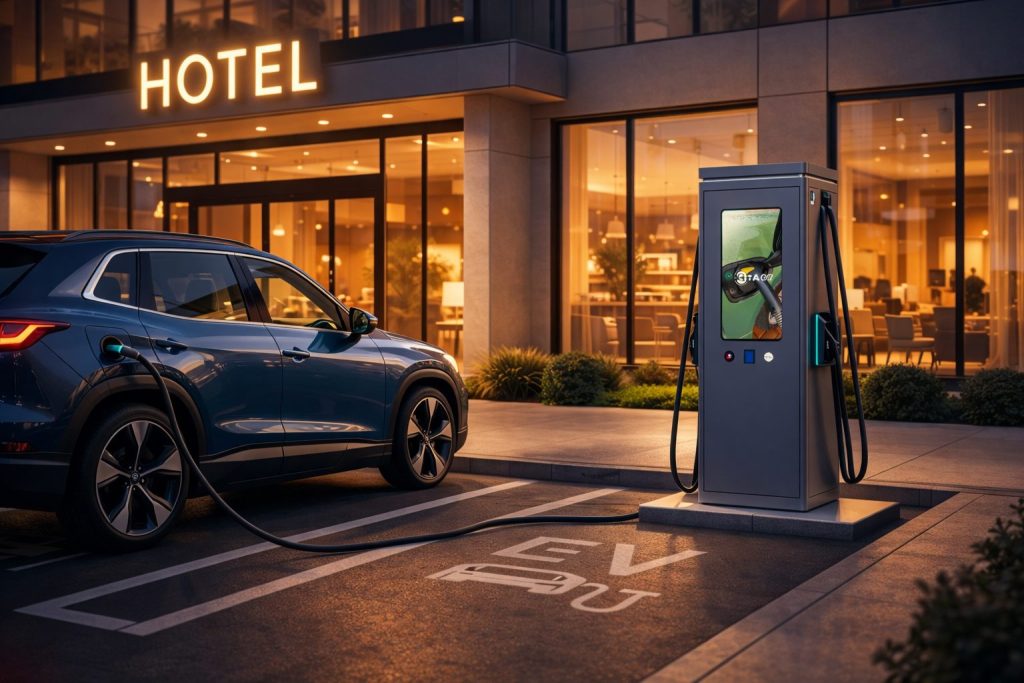
1) Hotels and Hospitality Venues
Hotels increasingly advertise EV charging as a guest amenity.
Many travelers specifically search for EV-friendly accommodation when planning trips.
For hospitality businesses, installing an EV charger can attract new guests while creating additional revenue opportunities through charging services.
2) Retail Parks and Shopping Centres
Retail environments benefit from charging sessions that naturally align with shopping behavior.
While vehicles charge, customers browse stores, dine at restaurants, and spend more time within the property.
This combination of charging revenue and increased retail spending can significantly improve overall site performance.
3) Office Buildings
Workplace charging demand continues to rise as employee EV ownership grows.
Office operators can generate revenue through:
- Employee charging programs
- Visitor charging
- Tenant charging services
These advantages make EV charger for commercial property investments increasingly attractive for office developments.
4) Fleet Depots and Logistics Facilities
Commercial fleet operators are rapidly electrifying vehicle fleets.
Although fleet charging focuses primarily on operational efficiency rather than public charging income, it can significantly reduce long-term fuel and maintenance costs.
Factors That Influence EV Charging Profitability
| Factor | Impact on Revenue |
|---|---|
| Location | Higher traffic areas generally experience more charging sessions |
| Charger Speed | Faster chargers typically attract more users |
| EV Adoption Rates | Areas with more EV drivers generate greater demand |
| Energy Costs | Electricity pricing directly affects profitability |
| Site Accessibility | Easy access improves charger utilization |
| Charging Network Visibility | Greater visibility attracts more users |
Several variables affect how much passive income a charging installation can generate.
Can EV Charging Increase Property Value?
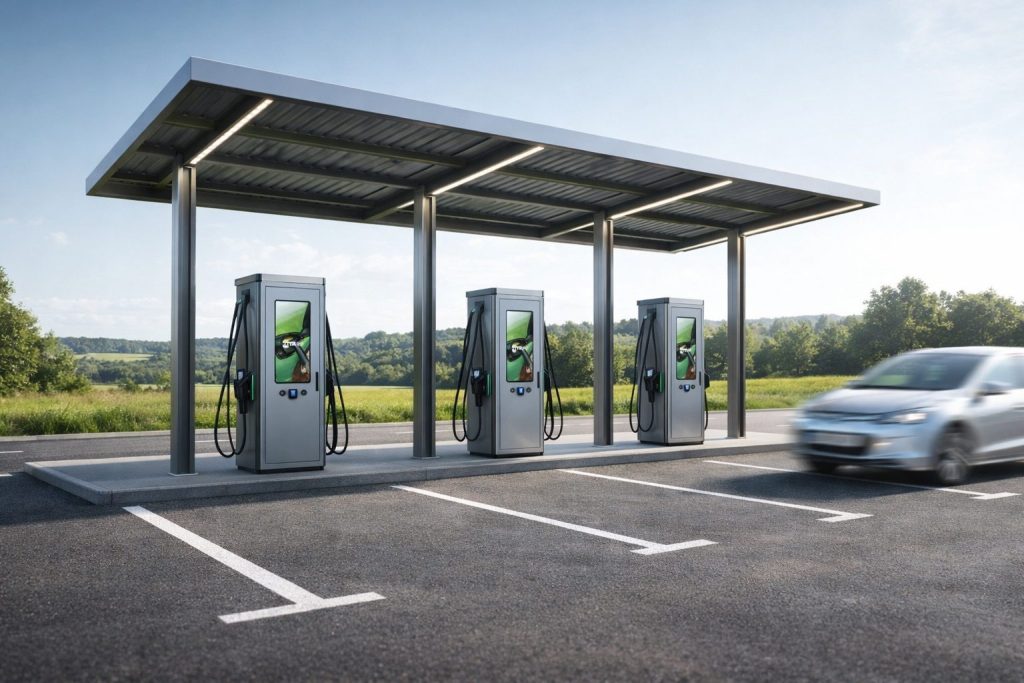
Many property owners are now viewing EV infrastructure as a long-term asset.
As EV ownership grows, properties with charging facilities become increasingly attractive to:
- Commercial tenants
- Corporate occupiers
- Customers
- Investors
- Property developers
For landlords and developers, EV charging infrastructure investment can improve competitiveness while enhancing overall property appeal.
Future-ready properties often command greater interest than similar sites without charging capabilities.
Smart Charging Technology and Revenue Optimization
Today’s charging systems offer far more than basic charging functionality.
Modern platforms enable businesses to:
- Monitor usage remotely
- Set dynamic pricing
- Control user access
- Manage energy consumption
- Generate detailed reporting
These features help organizations maximize EV charging revenue generation while improving operational efficiency.
Smart charging technology also allows businesses to optimize charging during lower-cost electricity periods, helping improve overall profitability.
What Costs Should Businesses Consider?

The cost of installing an EV charger depends on several factors:
- Charger type and power output
- Number of charging points
- Site electrical capacity
- Infrastructure requirements
- Grid connection upgrades
- Installation complexity
Although upfront costs vary, many businesses recover their investment over time through a combination of charging revenue, customer spending, operational savings, and increased property value.
When properly planned, monetise EV charging station strategies can help accelerate return on investment.
Turning EV Charging Into a Long-Term Business Asset
The rise of electric mobility is creating new opportunities for commercial property owners across multiple sectors.
What was once considered a sustainability feature is now becoming a revenue-generating business asset. Whether through direct charging fees, increased customer spending, improved tenant attraction, or enhanced property value, the financial benefits of installing an EV charger continue to grow as EV adoption accelerates.
Organizations that invest early are often better positioned to capitalize on future demand while establishing themselves as forward-thinking businesses prepared for the next phase of transportation.
Power Your Commercial Property with CITA EV Charger
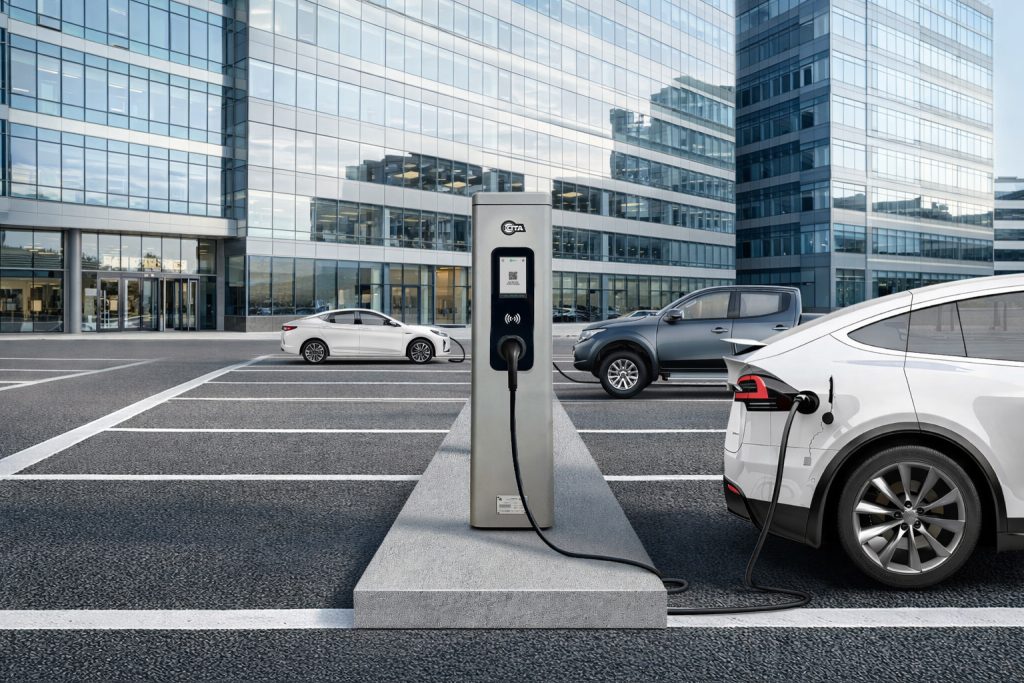
At CITA EV Charger, we help businesses unlock the full potential of EV charging infrastructure through reliable, scalable, and future-ready solutions.
From workplace charging and commercial destinations to fleet operations and public charging networks, our smart charging solutions are designed to support revenue generation, operational efficiency, and long-term growth.
Whether you are exploring your first charging installation or expanding an existing network, our team can help you build a charging strategy that supports your business goals today and into the future.
Ready to create new revenue opportunities with EV charging?
Contact CITA EV Charger today and discover how the right charging infrastructure can help power your business forward.